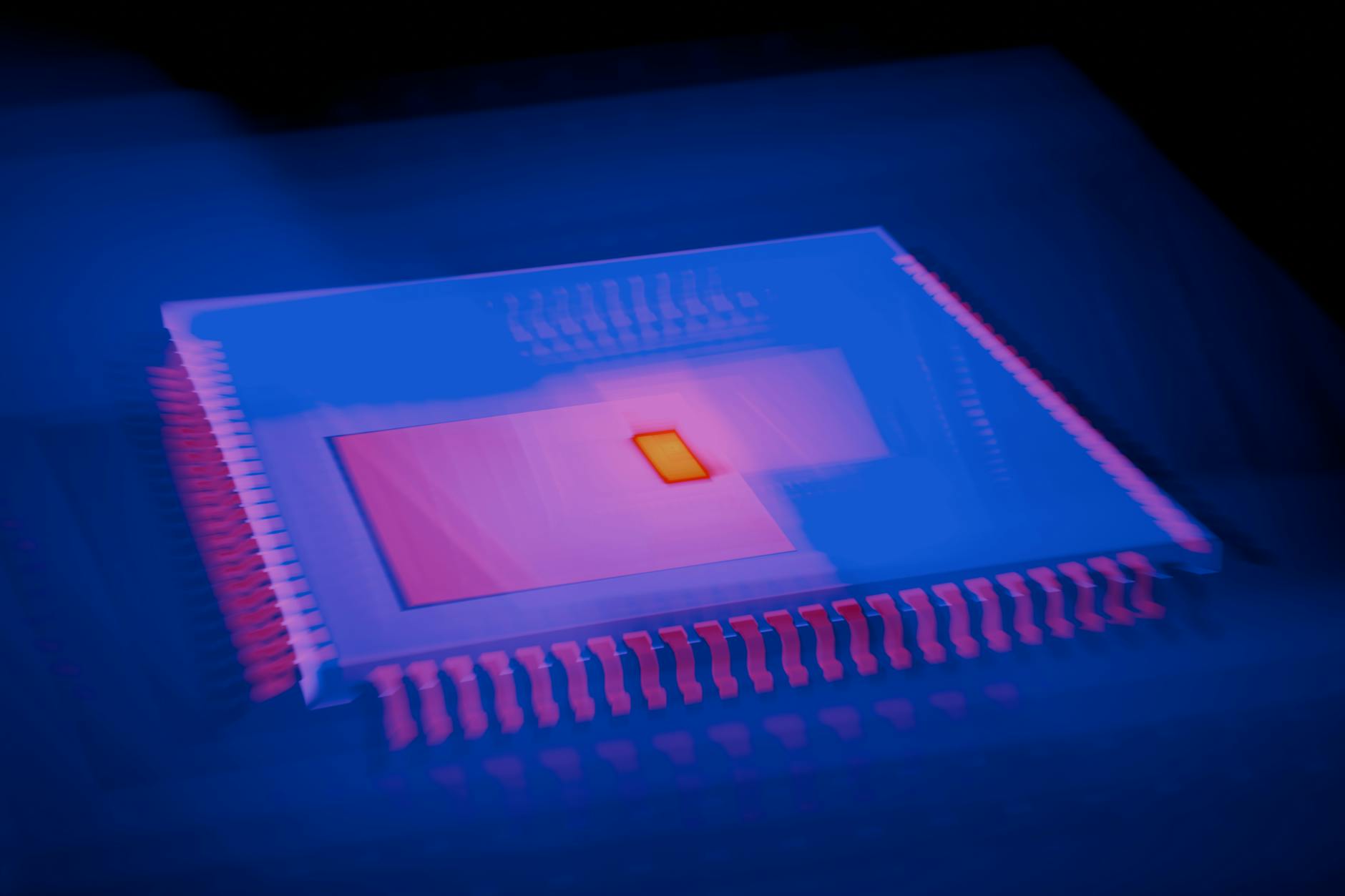
What is Quantum Computing Future: A World-Changing Revolution
Unlocking unparalleled computational power, quantum computing is set to redefine problem-solving and innovation across every sector.
Discover the FutureKey Takeaways
- ✓ Quantum computers leverage quantum-mechanical phenomena like superposition and entanglement to process information.
- ✓ They are poised to solve problems intractable for even the most powerful classical supercomputers.
- ✓ Key applications include drug discovery, materials science, financial modeling, and artificial intelligence.
- ✓ The journey to fault-tolerant quantum computers is ongoing, with significant research and development investments worldwide.
How It Works
Unlike classical bits (0 or 1), quantum bits (qubits) can exist in a superposition of both 0 and 1 simultaneously. This allows quantum computers to represent and process vast amounts of information exponentially more efficiently.
Entanglement is a phenomenon where two or more qubits become linked, such that the state of one instantly influences the state of the others, regardless of distance. This interconnectedness enables complex calculations and correlations not possible with classical computing.
Quantum gates are the basic building blocks of quantum circuits, analogous to logic gates in classical computers. They manipulate the states of qubits to perform computations, leveraging superposition and entanglement to explore multiple possibilities simultaneously.
After computations, the qubits' states are measured, collapsing their superposition into a definite classical state (0 or 1). This measurement extracts the result of the quantum computation, providing solutions to the problem posed.
The Quantum Leap: Understanding the Foundations of Quantum Computing
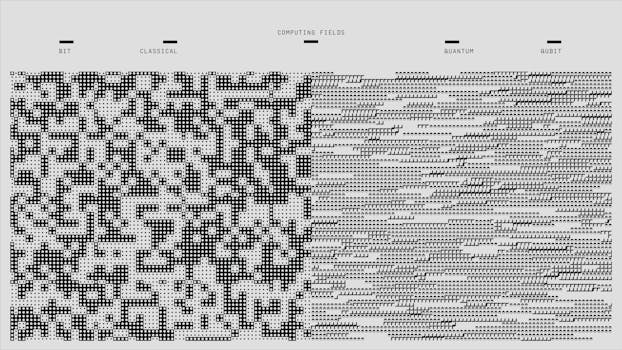 Photo: Google DeepMind / Pexels
Transformative Applications: Where Quantum Computing Will Reshape Industries
 Photo: Nicolas Foster / Pexels
Roadblocks and Breakthroughs: Navigating the Quantum Computing Landscape
 Photo: Nicolas Foster / Pexels
Ethical Considerations and Future Outlook: Navigating the Quantum Horizon
Photo: Nicolas Foster / Pexels
Comparison
| Feature | Classical Computing | Quantum Computing (NISQ) | Quantum Computing (Fault-Tolerant) |
|---|---|---|---|
| Information Unit | Bit (0 or 1) | Qubit (0, 1, or superposition) | Qubit (0, 1, or superposition) |
| Processing Power | Linear/Polynomial Growth | Exponential Potential | Exponential & Reliable |
| Problem Solving | Specific, sequential | Specific, early-stage complex | Broad, intractable problems |
| Error Rate | Very low, hardware-dependent | High, prone to decoherence | Extremely low, error-corrected |
| Key Applications | Everyday tasks, large databases | Algorithm exploration, specific optimization | Drug discovery, AI, materials science, cryptography |
| Current Availability | Widespread | Cloud access, research labs | Under development |
| Security Threat | ✓ (for current encryption) | ✗ (not yet capable) | ✓ (for current encryption) |
| Energy Consumption | Variable, from low to high | High (especially cooling) | Potentially high, improving |
What Readers Say
"Understanding what is quantum computing future is essential for anyone in tech. This article breaks down complex concepts into digestible information, painting a clear picture of its transformative potential and challenges. Truly a premium resource."
Dr. Elena Petrova · Boston, MA"As a software engineer, I've been trying to wrap my head around quantum computing. This piece clarified so much about the future applications and the current state of the technology. It's incredibly helpful for bridging the knowledge gap."
Mark Chen · San Francisco, CA"The depth of analysis on ethical considerations was particularly insightful. It's not just about the tech; it's about how we responsibly integrate it. This article provides a comprehensive view of what is quantum computing future."
Sarah Jenkins · Austin, TX"A very thorough overview. While some sections were quite technical, the overall explanation of quantum computing's future impact was compelling. I appreciate the balanced perspective on both opportunities and challenges."
David Lee · Seattle, WA"From drug discovery to finance, the article clearly articulated how quantum computing will revolutionize multiple sectors. It's a fantastic primer for anyone looking to understand the next big wave in technology."
Maria Rodriguez · New York, NYFrequently Asked Questions
What is quantum computing future primarily focused on?
The future of quantum computing is primarily focused on achieving 'quantum advantage' – solving problems that are intractable for classical computers – across various fields. This includes breakthroughs in drug discovery, materials science, financial modeling, artificial intelligence, and cybersecurity by leveraging phenomena like superposition and entanglement.
Will quantum computers replace classical computers in the future?
No, quantum computers are not expected to replace classical computers. Instead, they will serve as powerful accelerators for specific, highly complex computational tasks that classical computers struggle with. Classical computers will continue to be essential for everyday computing, data storage, and many other applications.
How can I prepare for the future impact of quantum computing?
To prepare for the future impact of quantum computing, individuals and organizations can start by learning the foundational concepts, exploring quantum programming tools and algorithms (often available via cloud platforms), and identifying potential applications within their industries. Staying informed about breakthroughs and ethical discussions is also crucial.
What is the cost associated with accessing quantum computing in the future?
Currently, direct ownership of quantum computers is prohibitively expensive and largely limited to major research institutions and tech giants. The future is likely to see continued access via cloud-based quantum services, offering pay-per-use or subscription models, making it more accessible to a wider range of businesses and researchers without the massive upfront investment.
How does quantum computing compare to supercomputing for future problems?
While supercomputers excel at complex, parallel classical computations, quantum computers leverage fundamentally different principles to tackle certain problems exponentially faster. For specific tasks like molecular simulation, optimization, or factoring large numbers, quantum computers are expected to far surpass even the most powerful supercomputers, opening up new frontiers of problem-solving.
Who should be concerned about the future of quantum computing?
Anyone involved in data security, advanced research, complex optimization, or strategic planning for technology-dependent industries should be concerned about the future of quantum computing. This includes governments, financial institutions, pharmaceutical companies, cybersecurity experts, and AI developers, as its impact will be widespread.
Are there any risks associated with the future of quantum computing?
Yes, significant risks include the potential to break current public-key encryption methods, posing a threat to global data security. There are also ethical concerns regarding the potential for quantum-enhanced AI, equitable access to this powerful technology, and the concentration of power among those who control it. Proactive risk mitigation strategies are essential.
What is the long-term trend for quantum computing adoption?
The long-term trend for quantum computing adoption is a gradual but accelerating integration into specialized problem-solving across various industries. It will likely move from cloud-based experimental access to more embedded, application-specific solutions, becoming a critical tool in the advanced computational toolkit alongside classical supercomputers.
The future of quantum computing promises a world transformed by unparalleled computational power. As we stand on the cusp of this revolution, understanding its potential and preparing for its impact is no longer optional, but essential. Explore further and join the conversation shaping tomorrow.