✓ AI is transforming every major industry, from healthcare to finance.
✓ Machine learning, a subset of AI, powers most modern AI applications.
✓ AI can automate repetitive tasks, analyze vast datasets, and make predictions.
✓ Ethical considerations and bias mitigation are crucial aspects of AI development.
How It Works
1
Data Collection & Preparation
AI systems require large volumes of data for training. This data is meticulously collected, cleaned, and formatted to ensure its quality and relevance for the specific AI task.
2
Algorithm Selection & Training
Developers choose suitable AI algorithms (e.g., neural networks, decision trees) based on the problem. The algorithm is then trained on the prepared data, learning patterns and relationships within it.
3
Model Evaluation & Refinement
After training, the AI model's performance is evaluated using new, unseen data. Based on these results, the model is refined and optimized to improve its accuracy, efficiency, and generalization capabilities.
4
Deployment & Application
Once a model is deemed satisfactory, it is deployed into real-world applications. It then uses its learned knowledge to perform tasks, make predictions, or assist users, continuously learning and adapting.
Understanding the Core: What is Artificial Intelligence Used For?
Photo: Magda Ehlers / Pexels
Artificial Intelligence (AI) has rapidly transitioned from science fiction to a fundamental pillar of modern technology, permeating nearly every aspect of our lives, often without us even realizing it. At its heart, AI refers to the simulation of human intelligence processes by machines, especially computer systems. These processes include learning (the acquisition of information and rules for using the information), reasoning (using rules to reach approximate or definite conclusions), and self-correction. The ultimate goal of AI is to enable machines to perform tasks that typically require human intelligence, doing so with increasing efficiency, accuracy, and scale.
So, what is artificial intelligence used for in practical terms? The applications are incredibly diverse, spanning across industries and touching our daily routines. From the moment you unlock your smartphone with facial recognition to the personalized recommendations you receive on streaming services, AI is at play. It's the engine behind search engine results, helping you find information almost instantly by understanding your queries and ranking relevant content. In e-commerce, AI analyzes your browsing history and purchase patterns to suggest products you might like, enhancing your shopping experience and driving sales for businesses. These seemingly simple interactions are powered by complex algorithms that learn from vast datasets, constantly adapting and improving their performance.
Beyond consumer-facing applications, AI plays a crucial role in industries that are foundational to our society. In healthcare, AI assists in diagnosing diseases earlier and more accurately, predicting patient outcomes, and even accelerating drug discovery. Imagine an AI system sifting through millions of medical images to detect subtle signs of cancer that a human eye might miss, or analyzing genetic data to tailor personalized treatment plans. The implications for improving public health are immense. Similarly, in finance, AI is used for fraud detection, algorithmic trading, risk assessment, and personalized financial advice. It can identify suspicious transactions in real-time, protecting consumers and financial institutions from illicit activities. The ability of AI to process and analyze massive amounts of data at speeds impossible for humans gives it a distinct advantage in these high-stakes environments. The scope of AI's utility is expanding exponentially, making it an indispensable tool for innovation and progress across all sectors. Learn more about the fundamentals of AI technology and its underlying principles.
Revolutionizing Industries: AI Applications Across Sectors
The impact of artificial intelligence is not confined to a few niche areas; it is a transformative force revolutionizing entire industries. Let's delve deeper into specific sectors to understand the breadth of what artificial intelligence is used for.
In the automotive industry, AI is the backbone of autonomous vehicles. Self-driving cars rely on AI to perceive their environment through sensors, interpret complex road conditions, predict the behavior of other vehicles and pedestrians, and make real-time driving decisions. This technology promises to enhance safety, reduce traffic congestion, and improve transportation efficiency. Beyond fully autonomous cars, AI powers advanced driver-assistance systems (ADAS) like adaptive cruise control, lane-keeping assist, and automatic emergency braking, making today's cars smarter and safer. The data collected from these systems further refines AI models, leading to continuous improvements in vehicle intelligence.
Manufacturing and logistics are also being reshaped by AI. In factories, AI-powered robots perform precision tasks, handle heavy loads, and automate assembly lines, increasing production speed and reducing errors. Predictive maintenance, another key AI application, analyzes sensor data from machinery to anticipate equipment failures before they occur, allowing for proactive repairs and minimizing downtime. In logistics, AI optimizes supply chain management, from inventory forecasting and warehouse automation to route optimization for delivery fleets, ensuring goods move efficiently from production to consumption. This leads to significant cost savings and improved operational resilience.
Customer service has seen a dramatic shift with the integration of AI. Chatbots and virtual assistants powered by AI are now common, providing instant support, answering frequently asked questions, and guiding customers through processes 24/7. These AI agents can handle a large volume of inquiries, freeing human agents to focus on more complex issues. Furthermore, AI analyzes customer interactions to identify sentiment, personalize responses, and improve overall service quality. This leads to higher customer satisfaction and more efficient support operations. The ability of AI to understand natural language and learn from past interactions makes it an invaluable asset in enhancing customer experiences.
Even creative fields are benefiting from AI. In entertainment, AI is used for content recommendation, generating special effects, and even composing music or writing scripts. Streaming platforms use AI to suggest movies and shows based on your viewing habits, keeping you engaged. In media, AI can automate news summarization, translate content, and even assist journalists in data analysis for investigative reporting. These applications highlight AI's versatility, extending its utility far beyond purely analytical tasks into areas traditionally considered human-exclusive. The lines between human creativity and AI assistance are becoming increasingly blurred, opening up new possibilities for innovation across all creative domains.
AI in Daily Life: Enhancing Convenience and Security
The reach of artificial intelligence extends deeply into our daily lives, often operating in the background to enhance convenience, improve security, and personalize our experiences. Understanding what artificial intelligence is used for in these everyday scenarios helps demystify the technology and highlights its pervasive impact. Think about your smartphone: facial recognition to unlock it, voice assistants like Siri or Google Assistant that respond to your commands, and predictive text that anticipates your next word are all powered by sophisticated AI algorithms. These features are designed to make our interactions with technology more intuitive and efficient, seamlessly integrating into our routines.
Smart homes are another prime example of AI in action. Devices like smart thermostats learn your preferences and optimize energy consumption, while smart speakers manage your schedule, play music, and control other connected devices through voice commands. Security systems use AI for anomaly detection, differentiating between a pet and an intruder, or identifying unusual patterns of activity around your property. This level of intelligent automation not only adds convenience but also contributes to greater safety and energy efficiency within our living spaces. AI is transforming our homes into more responsive and intelligent environments, adapting to our needs and preferences with minimal intervention.
In the realm of personal health and fitness, AI-powered wearables track our activity levels, monitor heart rates, analyze sleep patterns, and even detect potential health anomalies. These devices collect vast amounts of personal data, which AI then processes to provide personalized insights and recommendations for improving well-being. From suggesting workout routines to nudging us towards better sleep habits, AI acts as a personal health coach, helping individuals make informed decisions about their lifestyle. The ability of AI to analyze complex biological data and identify subtle trends makes it an invaluable tool for preventative health and personalized wellness management. Explore the future of personalized AI and its potential to revolutionize individual health outcomes.
Even public safety and urban planning leverage AI. Smart city initiatives use AI to optimize traffic flow, manage waste collection, monitor public infrastructure, and enhance emergency response systems. By analyzing real-time data from sensors and cameras, AI can identify bottlenecks, predict congestion, and even detect potential hazards, allowing city officials to respond proactively. This leads to more efficient urban environments, reduced pollution, and improved quality of life for residents. The applications are diverse, ranging from optimizing public transport routes to enhancing surveillance for crime prevention, all contributing to safer and more livable cities. The continuous collection and analysis of urban data by AI systems promise to make our cities smarter, more sustainable, and better equipped to handle the challenges of modern living.
Navigating the Future: Ethical AI and Emerging Trends
As we continue to explore what artificial intelligence is used for, it's equally important to consider the ethical implications and emerging trends that will shape its future development. The power of AI comes with significant responsibilities, and ensuring its development and deployment are aligned with human values is paramount. Key ethical considerations include data privacy, algorithmic bias, transparency, and accountability. AI systems are only as unbiased as the data they are trained on; if historical data reflects societal biases, the AI can perpetuate or even amplify them. Therefore, meticulous attention to data collection, algorithm design, and continuous monitoring is essential to mitigate bias and ensure fairness.
Transparency in AI, often referred to as 'explainable AI' (XAI), is crucial. Users and developers need to understand how AI models arrive at their decisions, especially in critical applications like healthcare or criminal justice. Without transparency, it's difficult to identify and correct errors, or to build trust in AI systems. Accountability frameworks are also necessary to determine who is responsible when an AI system makes a mistake or causes harm. These ethical considerations are not merely theoretical; they are practical challenges that developers, policymakers, and society as a whole must address to harness AI's benefits responsibly.
Emerging trends in AI point towards even more sophisticated and integrated applications. Federated learning, for instance, allows AI models to be trained on decentralized datasets without the data ever leaving its source, addressing privacy concerns. Edge AI brings AI processing closer to the data source, reducing latency and enabling real-time decision-making in devices like drones or smart sensors. Generative AI, capable of creating realistic text, images, and other media, is rapidly advancing, opening up new possibilities in content creation, design, and even scientific research. Quantum AI, while still largely theoretical, promises to unlock unprecedented computational power for solving problems currently beyond the reach of classical computers.
The future of what artificial intelligence is used for will undoubtedly involve a deeper integration of AI into complex systems, leading to more intelligent automation, hyper-personalized experiences, and potentially revolutionary scientific discoveries. However, this future also necessitates ongoing dialogue, robust ethical guidelines, and interdisciplinary collaboration to ensure that AI serves humanity's best interests. Investing in AI literacy and critical thinking will be vital for individuals to navigate an increasingly AI-driven world. The journey of AI is just beginning, and its trajectory will be shaped by how wisely we choose to develop and apply its immense capabilities.
### Key Considerations for Ethical AI Development:
* **Data Privacy:** Protecting sensitive information used in AI training and deployment.
* **Algorithmic Bias:** Actively identifying and mitigating unfair biases in AI decision-making.
* **Transparency:** Ensuring AI systems' decisions are understandable and explainable.
* **Accountability:** Establishing clear responsibility for AI system outcomes.
* **Human Oversight:** Maintaining human control and intervention capabilities in AI systems.
* **Fairness and Equity:** Designing AI to benefit all segments of society equitably.
* **Security:** Protecting AI systems from malicious attacks and unintended manipulation.
Comparison
Feature
Traditional Software
Machine Learning (AI)
Deep Learning (Advanced AI)
Decision Logic
Explicitly Programmed Rules
Learns from Data Patterns
Learns Complex Hierarchical Features
Adaptability
Limited to Programmed Rules
Adapts to New Data/Patterns
Highly Adaptive, Feature Extraction
Data Dependency
Low (rules driven)
High (requires large datasets)
Very High (requires vast datasets)
Complexity of Problems
Simple, well-defined
Complex, pattern recognition
Highly Complex, nuanced understanding
Human Intervention
High (rule definition)
Moderate (feature engineering)
Low (learns features automatically)
Performance with More Data
Stagnant
Improves significantly
Improves dramatically
What Readers Say
★★★★★
"This article brilliantly explains what artificial intelligence is used for. I had no idea AI was behind so many of the apps and services I use daily. It's truly eye-opening and incredibly helpful for anyone trying to grasp AI's impact."
Sarah J. · Austin, TX
★★★★★
"As a tech enthusiast, I found this deep dive into AI applications fascinating. The examples across industries were well-chosen and clarified the immense potential of AI. It's a must-read for understanding modern tech."
Mark D. · Seattle, WA
★★★★★
"The section on AI in healthcare was particularly insightful. It accurately describes how AI assists in diagnostics and drug discovery, which is directly impacting patient care and research outcomes in my field. Excellent coverage!"
Dr. Emily R. · Boston, MA
★★★★★
"A very comprehensive overview of what AI is used for. While I appreciated the breadth, I would have loved a bit more detail on the challenges of implementing AI in small businesses. Still, a fantastic resource overall."
Carlos M. · Miami, FL
★★★★★
"I often wondered about the practical uses of AI beyond chatbots. This article answered all my questions, showing how AI makes my smart home more efficient and even helps with traffic. It made complex concepts easy to understand."
Linda K. · Chicago, IL
Frequently Asked Questions
What are the most common applications of artificial intelligence today?
Today, AI is most commonly used in voice assistants (Siri, Alexa), facial recognition, recommendation engines (Netflix, Amazon), fraud detection, spam filtering, autonomous vehicles, and predictive maintenance in industrial settings. These applications leverage AI's ability to process data, recognize patterns, and make decisions.
Is AI going to take away all human jobs?
While AI will automate many repetitive tasks, it's more likely to transform jobs rather than eliminate them entirely. AI can augment human capabilities, leading to new roles focused on AI development, oversight, and tasks requiring uniquely human skills like creativity, critical thinking, and emotional intelligence. The focus is shifting towards human-AI collaboration.
How can I start learning about what artificial intelligence is used for?
You can start by reading articles like this one, watching educational videos, and exploring online courses from platforms like Coursera, edX, or Udacity. Many universities also offer introductory AI courses. Hands-on projects with publicly available AI tools and datasets are also an excellent way to gain practical understanding.
How much does it cost to implement AI in a business?
The cost of implementing AI varies greatly depending on the complexity of the project, the data required, the expertise needed, and the infrastructure involved. Simple AI solutions might cost thousands, while large-scale enterprise AI transformations can run into millions. It's an investment often justified by significant returns in efficiency, insights, and competitive advantage.
How does AI differ from traditional computer programming?
Traditional programming involves explicitly writing step-by-step instructions for a computer to follow. AI, particularly machine learning, involves training algorithms on data so they can learn patterns and make decisions or predictions without being explicitly programmed for every scenario. AI systems can adapt and improve over time, unlike static traditional programs.
Who should use artificial intelligence?
Anyone looking to automate tasks, gain deeper insights from data, improve decision-making, enhance customer experiences, or innovate new products and services can benefit from AI. This includes individuals using smart devices, businesses seeking operational efficiencies, researchers, and governments aiming to improve public services and safety.
Are there risks associated with the widespread use of AI?
Yes, potential risks include job displacement, algorithmic bias leading to unfair outcomes, privacy concerns due to extensive data collection, misuse of AI for malicious purposes (e.g., autonomous weapons), and the challenge of maintaining human control over increasingly autonomous systems. Ethical AI development and robust regulatory frameworks are crucial to mitigate these risks.
What are some future trends for what artificial intelligence is used for?
Future trends include the advancement of general AI (AGI), more sophisticated generative AI for content creation, pervasive edge AI for real-time processing, quantum AI for complex problem-solving, and AI deeply integrated into personalized medicine, climate modeling, and smart infrastructure. AI will continue to become more intuitive, autonomous, and capable of solving grand challenges.
Now that you understand what artificial intelligence is used for, from revolutionizing industries to enhancing your daily life, take the next step. Explore how AI can transform your business, empower your career, or simply enrich your understanding of the technological frontier. The future is AI-powered — be a part of it.

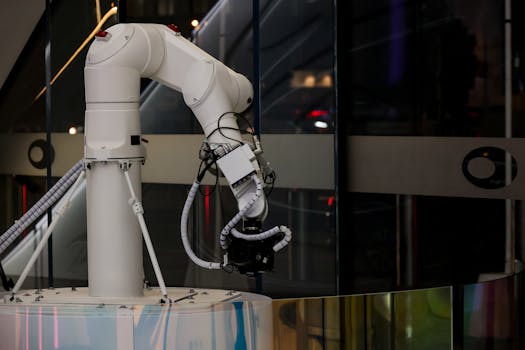 Photo: Magda Ehlers / Pexels