What is 5G Technology? Your Guide to the Next-Gen Network
July 25, 2026 16 min read 3,196 words
Dive deep into the fifth generation of cellular technology, unlocking unprecedented speeds and connectivity.
Explore 5G Now
Understanding the Fundamentals of 5G Connectivity
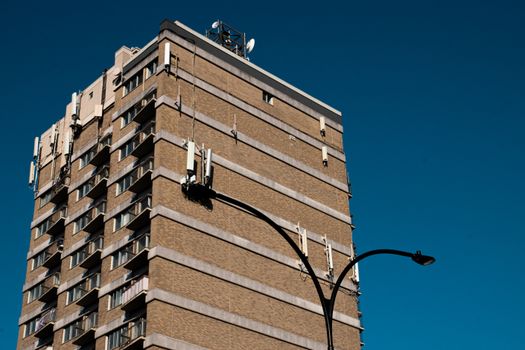 Photo: Francis Desjardins / Pexels
The advent of 5G technology marks a pivotal moment in the evolution of wireless communication. More than just a faster version of 4G, 5G represents a fundamental shift in network architecture and capabilities, designed to support a future where connectivity is not just ubiquitous, but also intelligent, instantaneous, and highly adaptable. To truly grasp what is 5G technology, we must look beyond mere speed metrics and delve into its foundational pillars: enhanced Mobile Broadband (eMBB), Ultra-Reliable Low-Latency Communications (URLLC), and Massive Machine-Type Communications (mMTC).
eMBB is perhaps the most immediately noticeable aspect for consumers. It refers to the significant boost in data speeds and capacity compared to 4G LTE. We're talking about theoretical peak speeds that can reach up to 10 gigabits per second (Gbps), though real-world speeds will vary depending on location, network congestion, and device capabilities. Even at more conservative estimates, 5G promises speeds that allow for downloading full-length HD movies in seconds, seamless 4K/8K video streaming, and lag-free online gaming. This enhanced bandwidth is crucial not just for individual users, but also for supporting data-intensive applications like virtual reality (VR) and augmented reality (AR), which demand massive amounts of data processed in real-time. The ability to handle more users and devices simultaneously without degradation in performance is a game-changer for crowded public spaces and large-scale events.
URLLC is where 5G truly distinguishes itself for industrial and mission-critical applications. This aspect focuses on providing extremely reliable connections with latencies as low as 1 millisecond. To put that in perspective, 4G typically has latency in the range of 50-100 milliseconds. This near-instantaneous response time is not just a luxury; it's a necessity for applications where even a slight delay can have severe consequences. Consider autonomous vehicles, where split-second decisions are critical for safety. URLLC enables vehicles to communicate with each other, traffic infrastructure, and cloud services with unprecedented responsiveness, paving the way for truly self-driving cars. Similarly, remote surgery, industrial automation, and smart grid management all stand to benefit immensely from 5G's ultra-low latency, allowing for real-time control and feedback loops that were previously impossible over wireless networks. This element of 5G will redefine safety, efficiency, and precision across countless sectors. For more insights into how these technologies are shaping various sectors, explore our article on
the impact of AI in industry.
mMTC is the backbone for the vast expansion of the Internet of Things (IoT). With mMTC, 5G is designed to connect a massive number of devices simultaneously, far exceeding the capabilities of previous generations. We're talking about millions of devices per square kilometer, all communicating efficiently and with minimal power consumption. This capability is essential for smart cities, where countless sensors monitor everything from air quality and traffic flow to waste management and public safety. In agriculture, mMTC enables smart farming solutions, with sensors monitoring soil conditions, crop health, and livestock. In healthcare, it supports remote patient monitoring, with wearables and smart devices continuously collecting and transmitting vital data. The sheer scale of device connectivity that mMTC allows will unlock new paradigms for data collection, analysis, and automation, leading to more efficient resource management and improved quality of life. Together, eMBB, URLLC, and mMTC paint a comprehensive picture of 5G's transformative power, moving beyond just faster phones to a fully connected, intelligent ecosystem.
The Technology Behind 5G: How It Achieves Unprecedented Performance
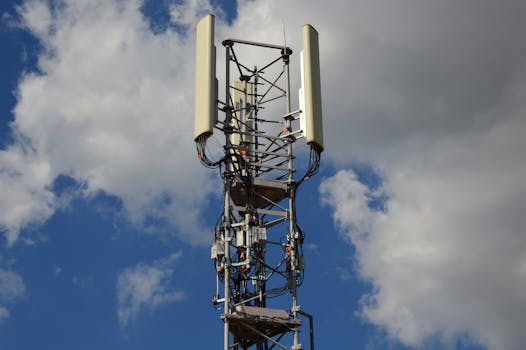 Photo: Ulrick Trappschuh / Pexels
Diving deeper into what is 5G technology reveals a sophisticated blend of hardware innovations and software-defined network architectures that collectively deliver its promised performance. Unlike its predecessors, 5G isn't just an upgrade; it's a paradigm shift built on several key technological advancements that work in concert. Understanding these components is crucial to appreciating the full scope of 5G's capabilities and its potential to reshape our digital landscape.
One of the most significant changes lies in the radio spectrum utilization. 5G operates across a much wider range of frequencies than 4G. It utilizes sub-6 GHz frequencies, which are similar to those used by 4G but with broader bandwidths, offering good coverage and penetration. However, the real game-changer is the use of millimeter wave (mmWave) frequencies. These high-frequency bands (typically 24 GHz to 100 GHz) offer enormous bandwidth, enabling multi-gigabit speeds and ultra-low latency. The trade-off is that mmWave signals have a shorter range and are more susceptible to obstruction by buildings, foliage, or even rain. To mitigate this, 5G deployments often feature a denser network of smaller cell sites, strategically placed to ensure continuous coverage, especially in urban areas. This multi-band approach allows 5G to tailor its performance to different use cases, offering a balance of speed, coverage, and capacity.
Another core innovation is Massive MIMO (Multiple-Input, Multiple-Output). While MIMO has been present in previous generations, 5G takes it to an entirely new level. Instead of a few antennas, 5G base stations can incorporate hundreds of tiny antennas. This allows the base station to send and receive multiple data streams simultaneously with many users, dramatically increasing network capacity and efficiency. Imagine a concert hall where every audience member has a direct, dedicated audio channel to the stage, rather than everyone sharing a single, broad broadcast. That's the essence of Massive MIMO – it enables spatial multiplexing, allowing more data to be transmitted and received concurrently, leading to higher throughput and better spectral efficiency.
Closely related to Massive MIMO is beamforming. This intelligent technology allows the base station to direct wireless signals precisely towards individual devices, rather than broadcasting them indiscriminately in all directions. Think of it like a spotlight rather than a floodlight. By focusing the energy of the radio waves, beamforming significantly improves signal quality, reduces interference, and extends the effective range of the signal, especially for mmWave frequencies. It also helps conserve power and makes the network more efficient. This dynamic steering of beams means that each device gets a stronger, more dedicated connection, even in congested environments.
Finally, network slicing is a fundamental architectural innovation that enables 5G to be so versatile. It allows mobile network operators to create multiple virtual, isolated networks on top of a single physical 5G infrastructure. Each 'slice' can be customized with specific performance characteristics – for instance, one slice might be optimized for ultra-low latency and high reliability for autonomous vehicles, while another might prioritize massive connectivity and low power consumption for IoT sensors. This flexibility means that 5G can serve a diverse range of applications, each with its unique demands, without compromising the performance of others. It's like having a customizable, dedicated network for every specific need, all running on the same physical infrastructure. This software-defined approach makes 5G incredibly adaptable and future-proof.
Transformative Applications and the Future Impact of 5G on Daily Life
 Photo: Mathias Reding / Pexels
The true measure of what is 5G technology lies not just in its technical specifications, but in its potential to revolutionize industries and profoundly impact our daily lives. Beyond faster smartphone downloads, 5G's unique capabilities – ultra-high speed, extremely low latency, and massive connectivity – are poised to unlock a new era of innovation across virtually every sector, creating possibilities that were once confined to science fiction. Understanding these applications helps paint a clearer picture of the future 5G is building.
In the realm of entertainment and communication, 5G will elevate experiences to unprecedented levels. Imagine truly immersive virtual and augmented reality applications that are indistinguishable from reality, rendered in real-time without any lag. High-definition cloud gaming will become ubiquitous, allowing users to stream complex games to any device without powerful local hardware. Live events, from sports to concerts, could offer multi-angle 8K streaming with interactive elements, placing viewers at the heart of the action. Beyond entertainment, 5G will facilitate seamless, high-quality video conferencing and collaboration, making remote work and distance learning more effective and engaging than ever before. The ability to share massive files and collaborate on data-intensive projects will be instantaneous, enhancing productivity across the board.
For industries, 5G is the backbone of Industry 4.0. In manufacturing, it will enable smart factories where machines, robots, and sensors communicate wirelessly in real-time, optimizing production lines, predictive maintenance, and quality control. This level of automation and data exchange will lead to significant efficiency gains, reduced downtime, and more flexible production capabilities. In logistics, autonomous drones and vehicles, powered by 5G's low latency, will revolutionize delivery systems, making them faster, more efficient, and potentially more environmentally friendly. The ability to track and manage vast inventories with precision will transform supply chain management, making it more resilient and responsive. Read more about these advancements in our piece on
the evolution of smart manufacturing.
Healthcare stands to be profoundly transformed by 5G. Remote surgery, where a surgeon controls robotic instruments from thousands of miles away, becomes a viable reality thanks to URLLC. Telemedicine will evolve to include high-fidelity diagnostics and monitoring, allowing doctors to provide sophisticated care remotely. Wearable health devices will continuously transmit vital data, enabling proactive health management and personalized treatments. Emergency services could utilize 5G-enabled drones for rapid assessment of disaster zones or for delivering critical medical supplies. The sheer volume of data collected from medical IoT devices, combined with AI, will lead to new breakthroughs in disease prevention and treatment.
Smart cities will leverage 5G to optimize urban living. Intelligent traffic management systems will reduce congestion and pollution. Smart grids will manage energy consumption more efficiently, integrating renewable sources seamlessly. Public safety will be enhanced through connected surveillance systems, environmental sensors monitoring air and water quality, and rapid response capabilities. From smart streetlights that adjust illumination based on pedestrian traffic to connected waste management systems that optimize collection routes, 5G will create more sustainable, efficient, and livable urban environments. The cumulative effect of these applications is a society where connectivity is seamlessly integrated into the fabric of daily life, making everything smarter, faster, and more responsive.
Navigating the Challenges and Future Outlook of 5G Deployment
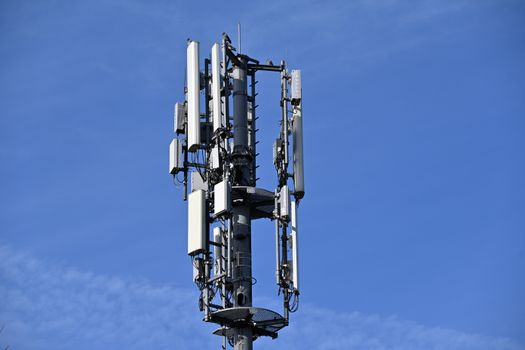 Photo: Edvin Gál / Pexels
While the promises of what is 5G technology are vast and exciting, its widespread deployment and full realization are not without significant challenges. Understanding these hurdles provides a balanced perspective on the current state and future trajectory of 5G, particularly in the United States. Addressing these complexities is crucial for unlocking the technology's full potential and ensuring equitable access to its transformative benefits.
One of the primary challenges is the extensive infrastructure build-out required. Unlike previous generations that largely upgraded existing cell towers, 5G, especially mmWave, necessitates a much denser network of small cells. These smaller base stations need to be installed on utility poles, streetlights, and buildings, often every few hundred feet in dense urban areas. This requires significant capital investment, complex permitting processes, and coordination with local governments and property owners. The sheer scale of this deployment is unprecedented, and securing the necessary sites and power infrastructure can be a time-consuming and costly endeavor. While sub-6 GHz 5G can leverage existing infrastructure more readily, the true high-speed, low-latency benefits often depend on mmWave deployments in specific areas.
Another significant hurdle is spectrum availability and allocation. Different countries and regions have varying approaches to spectrum management, which can impact 5G's performance and deployment speed. In the US, the allocation of C-band spectrum has been critical for mid-band 5G, offering a good balance of speed and coverage. However, conflicts with existing users, such as aviation, have highlighted the complexities of spectrum sharing and the need for careful regulatory oversight. Ensuring sufficient, interference-free spectrum for all 5G services remains an ongoing challenge that requires collaboration between government, industry, and other stakeholders.
Security concerns are also paramount in a 5G world. With a massively expanded attack surface due to the proliferation of IoT devices and the network slicing architecture, securing 5G networks is more critical than ever. The core network's software-defined nature introduces new vulnerabilities, and the increased reliance on a wider range of vendors raises supply chain security questions. Robust encryption, authentication protocols, and continuous monitoring are essential to protect sensitive data and critical infrastructure from cyber threats. Public perception and concerns about potential health effects from radiofrequency radiation, despite extensive scientific consensus on its safety, also present a challenge that requires transparent communication and education.
Looking ahead, the future outlook for 5G is incredibly promising despite these challenges. As deployment continues and networks mature, we can expect to see an accelerating adoption of 5G-enabled applications and services. The focus will shift from simply building out the network to leveraging its capabilities for innovative use cases. Edge computing, where data processing occurs closer to the source of data generation, will become increasingly intertwined with 5G, further reducing latency and enhancing real-time applications. The integration of AI and machine learning will optimize 5G network performance, predict demand, and enable even more sophisticated network slicing. Ultimately, 5G is not just a technological upgrade; it's a foundational platform for the next wave of digital transformation, poised to reshape how we live, work, and interact with the world around us for decades to come. The ongoing investment and innovation in this space signal a future that is more connected, intelligent, and efficient.