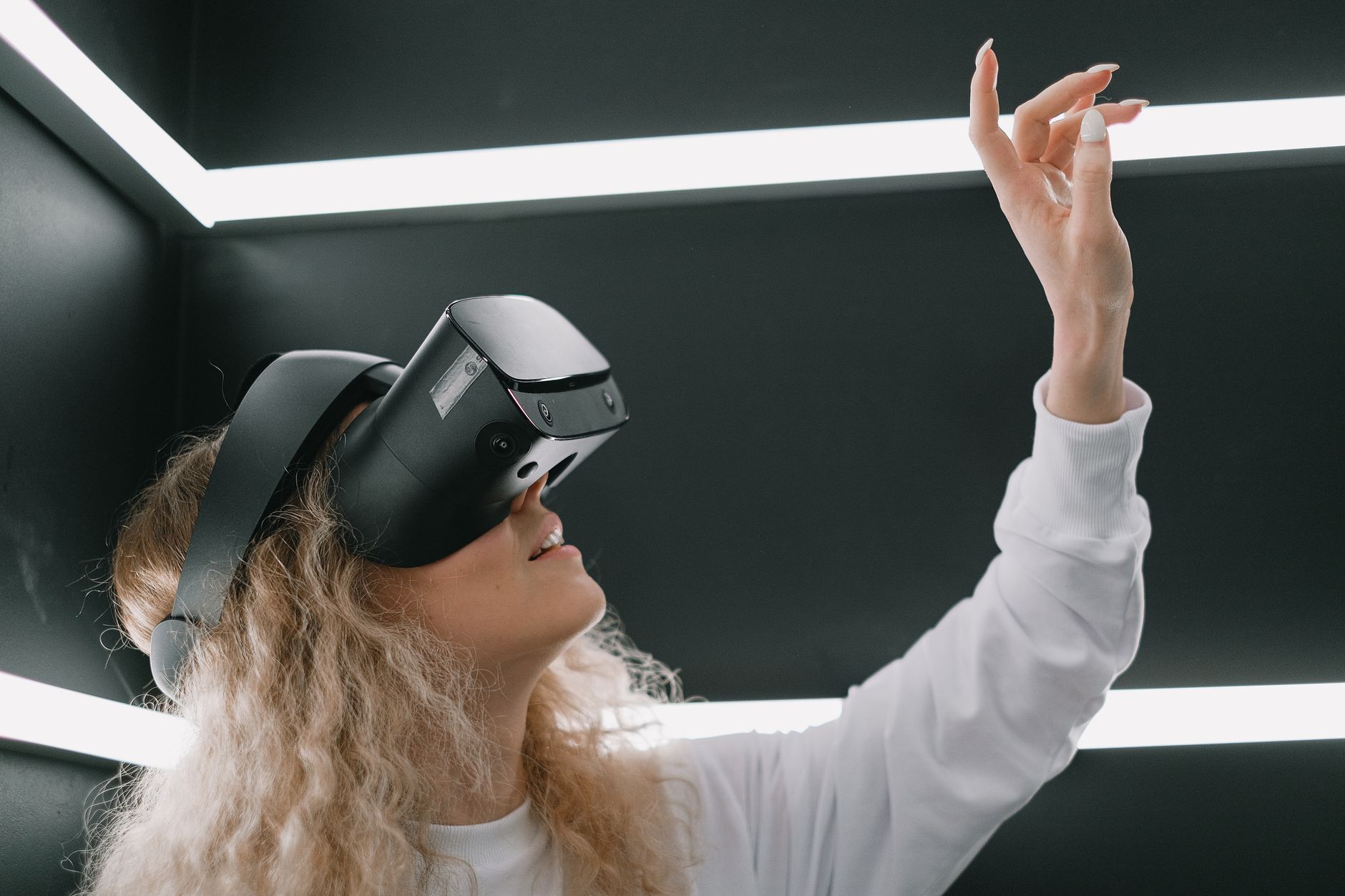
How Does Virtual Reality Work Explained? Your Complete Guide
Unlock the secrets behind immersive virtual worlds, from hardware to software, and understand the magic of VR.
Explore VR's Inner WorkingsKey Takeaways
- ✓ VR uses specialized hardware (headsets, controllers) and software to create simulated environments.
- ✓ Immersion is achieved through stereoscopic displays, head tracking, and haptic feedback.
- ✓ Latency, field of view, and resolution are critical factors influencing the VR experience.
- ✓ VR applications span gaming, education, training, healthcare, and social interaction.
How It Works
Sensors in the VR headset and controllers capture user movements and positions. This data is fed to a powerful computer or mobile device for rapid processing.
The computer renders two slightly different 3D images, one for each eye, based on the user's head position. These images are then displayed on high-resolution screens inside the headset.
Lenses within the headset magnify and distort these images to fill the user's entire field of view. This creates the illusion of depth and a vast, immersive world.
Audio cues, often spatialized, enhance immersion, while haptic feedback in controllers simulates touch. Users interact with the virtual environment through gestures and button presses.
The Foundation of Immersion: VR Hardware Components
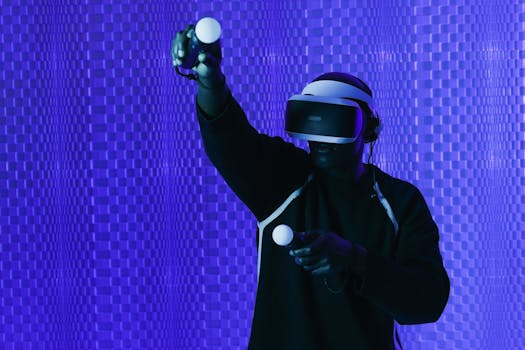 Photo: SHVETS production / Pexels
The Software Engine: Rendering Virtual Worlds and Interactions
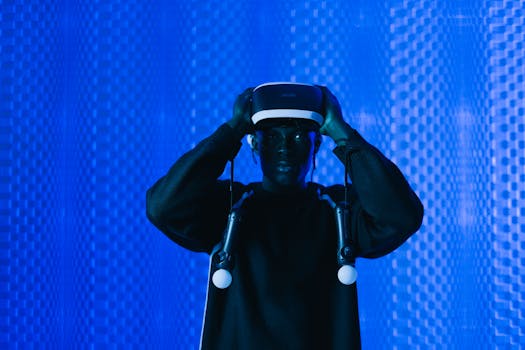 Photo: SHVETS production / Pexels
Sensory Deception: The Psychology Behind VR Immersion
 Photo: Darlene Alderson / Pexels
Overcoming Challenges and The Future of VR
Photo: Darlene Alderson / Pexels
- Key Challenges:
- High computational demands for photorealism.
- Motion sickness for sensitive users.
- Cost and accessibility barriers for high-end systems.
- Need for dedicated physical space.
- Future Innovations:
- Varifocal displays for reduced eye strain.
- Advanced haptic feedback for realistic touch.
- Full-body tracking for natural avatars.
- Foveated rendering using eye-tracking.
- Integration with AI for dynamic environments.
- Convergence with AR into Mixed Reality (MR).
Comparison
| Feature | High-End PC VR | Standalone VR | Mobile VR (older) |
|---|---|---|---|
| Processing Power | High (External PC) | Medium (On-board) | Low (Smartphone) |
| Graphics Quality | Excellent | Good | Basic |
| Tracking Precision | Excellent (6DoF) | Good (6DoF) | Limited (3DoF) |
| Freedom of Movement | Room-scale (wired/wireless adapter) | Room-scale (wireless) | Stationary |
| Cost | High ($1000+) | Medium ($300-$600) | Low ($15-$100) |
| Setup Complexity | Moderate to High | Low | Very Low |
| Requires External PC | ✓ | ✗ | ✗ |
What Readers Say
"Before reading this, I vaguely understood how virtual reality works explained, but now it's crystal clear! The breakdown of hardware and software was incredibly helpful. My gaming experience just got a whole lot more appreciated."
Sarah J. · Austin, TX"As an aspiring VR developer, this article provided a fantastic overview. The details on latency and sensory deception really highlighted the nuances of creating truly immersive experiences. A great resource!"
Mark D. · Seattle, WA"I used to think VR was just fancy video games, but this explanation of how virtual reality works explained its potential in education and training. It helped me understand why my kids are so engaged with their VR learning apps."
Emily R. · Orlando, FL"A very comprehensive article. While it covered a lot, I would have loved a deeper dive into the specific algorithms for spatial audio, but overall, it's an excellent primer on the subject. Well-written and easy to follow."
David L. · Boston, MA"This really demystified how virtual reality works explained for me. I've been hesitant to try VR due to motion sickness concerns, but understanding the technology behind it makes me feel more confident about trying a well-designed experience."
Jessica M. · Denver, COFrequently Asked Questions
What are the core components that explain how virtual reality works?
The core components include a Head-Mounted Display (HMD) with high-resolution screens and lenses, precise tracking systems (inside-out or outside-in) to monitor user movement, and controllers for interaction. Powerful software renders the virtual environment, processes tracking data, and generates spatial audio, all working together to create an immersive experience.
Does VR always cause motion sickness?
No, VR does not always cause motion sickness. While some individuals are more susceptible, modern VR systems have significantly reduced this issue through high refresh rates, low latency tracking, and improved display technology. Well-designed VR experiences also employ techniques to minimize artificial locomotion that can trigger discomfort. Many users experience no motion sickness at all.
How do I set up a basic VR system?
Setting up a basic VR system depends on the type. For standalone headsets (e.g., Meta Quest), you typically charge the headset, download the companion app on your phone, and follow on-screen instructions to connect to Wi-Fi and set up your play space boundary. For PC VR systems (e.g., Valve Index), you'll install software on your PC, set up external base stations in your room, and then connect the headset and controllers to your computer, often requiring more space and calibration.
Is VR expensive, and is it worth the investment?
The cost of VR varies widely. Entry-level standalone headsets can be found for a few hundred dollars, offering an excellent immersive experience without needing a powerful PC. High-end PC VR systems, however, can cost over a thousand dollars, not including the powerful gaming PC required. The 'worth' depends on your interest; for gaming, training, social interaction, or creative work, many find the immersive experiences and unique applications well worth the investment.
How does VR compare to Augmented Reality (AR)?
VR (Virtual Reality) creates a completely immersive, simulated environment, blocking out the real world. AR (Augmented Reality) overlays digital information onto the real world, enhancing what you already see. Think of VR as a completely new digital space, while AR is like adding digital layers to your existing physical space. Both aim to blend digital and physical realities but do so in fundamentally different ways, with VR offering full immersion and AR offering enhanced reality.
Who benefits most from understanding how virtual reality works explained?
Anyone interested in technology, gaming enthusiasts, aspiring VR developers, educators considering VR for learning, professionals in training and simulation fields, and even general consumers curious about the future of immersive experiences will benefit greatly from understanding the fundamental principles and technologies behind VR.
Are there any health risks associated with using VR?
While VR is generally safe, potential risks include eye strain from prolonged use, disorientation or motion sickness for some users, and the risk of physical injury if users aren't aware of their surroundings in the real world. It's recommended to take breaks, ensure proper fit, and clear your play space to mitigate these concerns. Modern headsets often include guardian systems to alert users to real-world obstacles.
What is the future outlook for VR technology?
The future of VR is bright and evolving rapidly. We anticipate lighter, more comfortable headsets, higher resolution displays, advanced haptics, and more sophisticated full-body tracking. The convergence with AI and AR into mixed reality experiences will blur the lines between digital and physical, expanding VR's applications far beyond gaming into areas like remote work, healthcare, education, and social interaction, making it a more integral part of daily life.
Now that you understand how virtual reality works explained, step into the future of immersive technology. Explore the possibilities, experience new worlds, and see how VR is transforming everything from entertainment to education and beyond.