
How Does 5G Technology Work? Unveiling the Next-Gen Network
Unlock the secrets behind 5G's revolutionary capabilities and understand its profound impact on our connected future.
Explore 5G NowKey Takeaways
- ✓ 5G utilizes higher frequency bands (mmWave) for faster speeds, alongside existing lower/mid bands.
- ✓ It employs Massive MIMO (Multiple Input, Multiple Output) to send and receive data simultaneously from multiple antennas.
- ✓ Beamforming directs signals precisely to devices, improving efficiency and reducing interference.
- ✓ Network slicing allows operators to create dedicated virtual networks tailored for specific applications.
- ✓ 5G's ultra-low latency is crucial for real-time applications like autonomous vehicles and remote surgery.
How It Works
5G operates across a wider spectrum, including low-band (for coverage), mid-band (for speed and coverage), and high-band (millimeter wave for extreme speeds in urban areas). This multi-spectrum approach optimizes performance for various use cases.
Base stations are equipped with a large number of antennas (Massive MIMO) to simultaneously transmit and receive data from many users. Beamforming technology then intelligently directs these radio signals directly to individual devices, enhancing signal quality and capacity.
5G's core network is software-defined and virtualized, enabling 'network slicing.' This allows carriers to create multiple independent virtual networks on the same physical infrastructure, each optimized for different applications like IoT, augmented reality, or enhanced mobile broadband.
To achieve ultra-low latency, 5G integrates with edge computing. This means processing data closer to the source (e.g., a smart factory or autonomous car), reducing the round-trip time to a central server and enabling real-time responsiveness.
The Fundamental Building Blocks: How 5G Network Architecture Differs
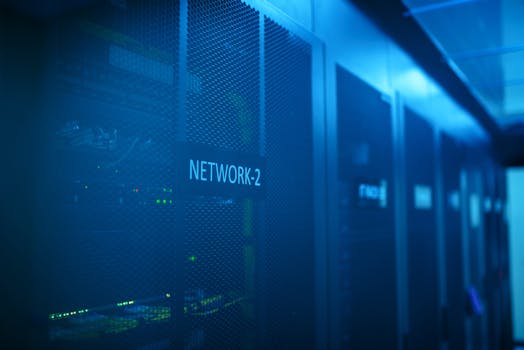 Photo: panumas nikhomkhai / Pexels
Beyond the air interface, the 5G core network is where much of the intelligence resides. It's built on a service-based architecture (SBA), which is cloud-native and virtualized. This means that network functions are no longer tied to specific hardware but run as software applications on general-purpose servers. This virtualization allows for unprecedented agility and scalability. For instance, new services can be deployed quickly without extensive hardware upgrades. This cloud-native approach also enables Network Slicing, a transformative feature where operators can create multiple virtual networks atop a single physical infrastructure. Each 'slice' can be tailored with specific characteristics, such as guaranteed bandwidth, ultra-low latency, or enhanced security, to meet the diverse demands of different applications and industries. For example, an autonomous vehicle network slice would prioritize ultra-low latency and reliability, while a smart city IoT sensor network slice might prioritize massive connectivity with lower bandwidth requirements. This dynamic allocation of resources is a cornerstone of 5G's versatility and its ability to support a vast array of new use cases. The disaggregation of hardware and software, coupled with the modularity of the SBA, makes the 5G core far more programmable and adaptable than its predecessors, paving the way for innovations that were simply not possible with 4G. To delve deeper into the underlying principles, consider how data transmission protocols have evolved to support these advanced capabilities.
Unlocking Speed and Capacity: Massive MIMO and Beamforming in Action
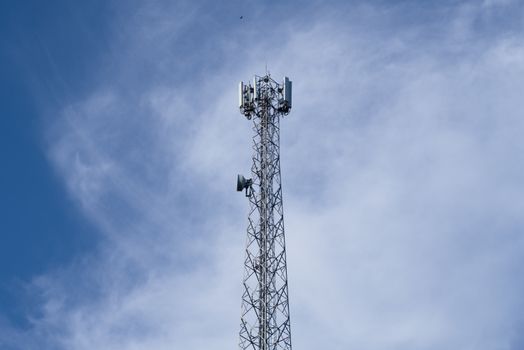 Photo: Qeis Ismail / Pexels
Complementing Massive MIMO is beamforming, a sophisticated signal processing technique. Instead of broadcasting radio signals indiscriminately in all directions, beamforming directs a focused beam of radio energy precisely towards a specific user's device. Think of it like a spotlight rather than a floodlight. This focused transmission has several profound benefits. Firstly, it enhances the signal strength and quality experienced by the user, leading to faster speeds and more reliable connections, especially in crowded environments. Secondly, by concentrating energy where it's needed, beamforming reduces interference to other users and minimizes wasted power. This also means that users located closer to the edge of a cell can still receive strong signals, extending the effective coverage area. Thirdly, beamforming allows multiple data streams to be sent to different users on the same frequency spectrum simultaneously without interfering with each other. This spatial multiplexing dramatically increases the overall capacity of a single cell site.
When Massive MIMO and beamforming are combined, they create a highly efficient and intelligent radio environment. The base station can dynamically adjust its beams to follow users as they move, ensuring continuous optimal connectivity. This combination is particularly vital for utilizing the high-band millimeter wave frequencies, where signals are easily blocked. By precisely directing these high-frequency beams, 5G can overcome some of the propagation challenges of mmWave, making those incredibly fast speeds a reality for users. These innovations are fundamental to 5G's ability to support not just faster smartphones, but also complex applications like augmented reality, virtual reality, and high-definition streaming on a massive scale.
The Role of Edge Computing and Ultra-Low Latency in 5G
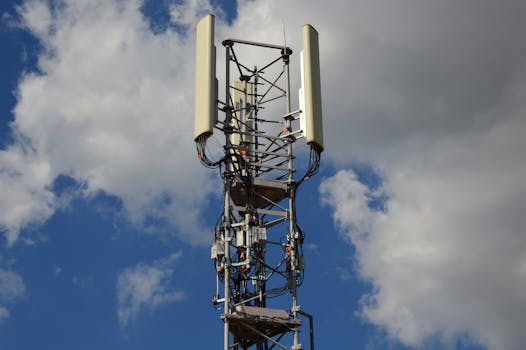 Photo: Ulrick Trappschuh / Pexels
In a 5G environment, edge computing means placing mini data centers or powerful servers at strategic locations, such as within 5G base stations, at cell towers, or in local aggregation points. When an application requires real-time processing, such as an autonomous vehicle needing to make instantaneous decisions based on sensor data, that data can be processed at the network edge, minimizing the travel distance and time. This significantly reduces the 'ping' time, making interactions feel immediate and responsive. For example, in industrial automation, where robots need to coordinate movements with millisecond precision, edge computing powered by 5G makes this possible by reducing the communication delay to a negligible level. Similarly, for augmented reality (AR) and virtual reality (VR) applications, where any noticeable lag can cause motion sickness or break immersion, ultra-low latency is paramount. Edge computing ensures that complex AR/VR rendering and interaction can happen almost instantly.
The integration of edge computing with 5G also enhances data security and privacy. By processing sensitive data locally at the edge, rather than sending it all to a central cloud, organizations can maintain greater control over their information. It also reduces the bandwidth burden on the core network, as not all data needs to travel long distances. This localized processing is a game-changer for industries like healthcare, where remote surgery could leverage 5G's low latency and edge computing to enable surgeons to operate on patients across vast distances with real-time feedback. The synergy between 5G's radio access network and a distributed, intelligent edge computing infrastructure is what truly differentiates it from previous generations, enabling a future where real-time interactions and intelligent automation become commonplace. For more insights into these developments, check out this article on the future of cloud computing.
Common Misconceptions About 5G Technology
Another common misunderstanding is that 5G is solely about faster speeds for smartphones. While enhanced mobile broadband (eMBB) is a key use case, 5G's true power lies in its other two pillars: Ultra-Reliable Low-Latency Communication (URLLC) and Massive Machine-Type Communications (mMTC). URLLC, as discussed, enables critical applications like autonomous vehicles and industrial automation by providing near-instantaneous response times. mMTC allows for the connection of an unprecedented number of devices – up to a million devices per square kilometer – which is essential for the Internet of Things (IoT) revolution, from smart cities to connected agriculture. Focusing only on speed misses the profound impact 5G will have on various industries and infrastructure.
A third misconception is that 5G requires a complete overhaul of existing infrastructure, making it incredibly expensive and slow to deploy. While 5G does introduce new technologies and a denser network of small cells, especially for mmWave, it also leverages existing 4G infrastructure. Many early 5G deployments use a 'Non-Standalone' (NSA) architecture, where 5G New Radio (NR) is anchored to an existing 4G LTE core. This allows for faster initial rollout. As the technology matures, networks transition to 'Standalone' (SA) 5G, which utilizes the new 5G core network for full capabilities like network slicing and ultra-low latency. The rollout is incremental and strategic, building upon existing assets. Lastly, some believe that 5G will replace Wi-Fi entirely. This is unlikely. 5G and Wi-Fi 6 (the latest Wi-Fi standard) are complementary technologies, each optimized for different scenarios. 5G excels at wide-area mobility and outdoor coverage, while Wi-Fi remains superior for high-bandwidth, short-range indoor connections, especially in homes and offices where fixed infrastructure is preferred. They will likely co-exist and even integrate, offering seamless connectivity experiences. Understanding these distinctions is key to appreciating the true scope and impact of 5G.
Comparison
| Feature | 5G (SA) | 4G LTE | Wi-Fi 6 |
|---|---|---|---|
| Peak Speed (Theoretical) | 10+ Gbps | 1 Gbps | 9.6 Gbps |
| Latency (Typical) | 1-5 ms | 20-50 ms | 10-20 ms |
| Connected Devices/km² | 1,000,000 | 100,000 | 1,000s (local) |
| Mobility | High (cellular) | High (cellular) | Low (local) |
| Network Slicing | ✓ | ✗ | ✗ |
| Edge Computing Integration | ✓ | Limited | Limited |
What Readers Say
"Understanding how does 5G technology work really opened my eyes. My new 5G phone's speed is incredible, but knowing about network slicing makes me excited for what it means for smart cities and self-driving cars."
Sarah J. · Austin, TX"This article clarified so much about 5G. I used to think it was just faster internet, but the explanation of Massive MIMO and beamforming shows how much more efficient and powerful it is."
Mark D. · Seattle, WA"As a medical professional, the details on ultra-low latency and edge computing for remote surgery were fascinating. It's clear how 5G will enable breakthroughs in critical applications, reducing response times significantly."
Dr. Emily R. · Boston, MA"Good breakdown of how does 5G technology work, especially the different frequency bands. While my current experience is mostly faster downloads, the potential for IoT and industrial uses is clearly massive, though full rollout will take time."
David L. · Denver, CO"The explanation of network slicing was a revelation. It makes perfect sense how carriers can optimize the network for different services, making 5G incredibly versatile for everything from gaming to smart home devices."
Chloe P. · Miami, FLFrequently Asked Questions
What are the main components of how 5G technology works?
5G technology primarily works through three main components: a new radio access technology (5G NR) that uses diverse frequency bands (low, mid, and high-band/mmWave), a redesigned, virtualized core network supporting network slicing, and advanced antenna technologies like Massive MIMO and beamforming to efficiently deliver signals.
Is 5G safe for health?
Yes, major scientific and health organizations worldwide, including the WHO, have consistently stated that there is no established scientific evidence of adverse health effects from 5G exposure at levels below international guidelines. 5G operates within safe, non-ionizing radiation limits.
How can I get 5G on my phone?
To get 5G, you need a 5G-compatible smartphone, a 5G-enabled plan from your mobile carrier, and to be in an area with 5G network coverage. Once these conditions are met, your phone should automatically connect to 5G when available.
Is 5G more expensive than 4G?
Initially, 5G devices and plans might have been slightly more expensive, but as 5G becomes more widespread, prices are becoming comparable to 4G. Many carriers offer 5G access as part of their standard unlimited plans without a premium charge, making it more accessible.
How does 5G compare to Wi-Fi 6?
5G and Wi-Fi 6 are complementary. 5G is designed for wide-area cellular mobility and large-scale outdoor coverage, offering consistent performance over broad distances. Wi-Fi 6 is optimized for high-bandwidth, short-range indoor use, providing excellent speed and capacity within local networks like homes and offices.
Who benefits most from 5G's ultra-low latency?
Industries and applications requiring real-time responsiveness benefit most from 5G's ultra-low latency. This includes autonomous vehicles, remote surgery, industrial automation, augmented reality (AR), virtual reality (VR), and cloud gaming, where even a few milliseconds of delay can impact performance or safety.
Does 5G use more energy than 4G?
While 5G base stations can consume more power due to increased processing and antenna arrays, the technology is designed to be more energy-efficient per bit of data transmitted. Features like sleep modes and dynamic power allocation help mitigate overall energy consumption, especially as networks become more optimized.
What's next after 5G?
The next generation of wireless technology is already being researched, often referred to as 6G. It aims to build upon 5G's foundations, exploring new frequency bands (terahertz), integrated sensing and communication, AI-driven networks, and even more immersive extended reality experiences, pushing the boundaries of connectivity even further.
Understanding how does 5G technology work reveals a paradigm shift in connectivity, far beyond just faster speeds. This foundational knowledge empowers you to fully grasp its potential and prepare for a future where virtually everything is intelligently connected and responsive.