The Future of Virtual Reality Technology: A Deep Dive
future of virtual reality technology

The Future of Virtual Reality Technology: A Deep Dive

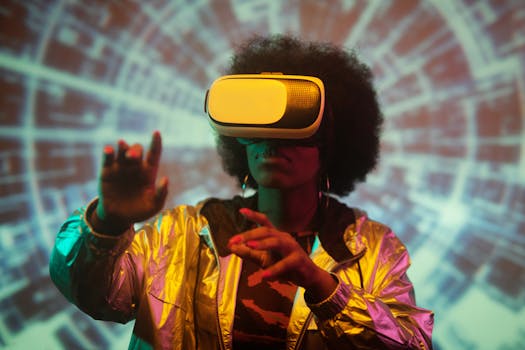
Black woman exploring virtual reality with headset and futuristic backdrop.Photo: Darlene Alderson / Pexels

The Future of Virtual Reality Technology: A Deep Dive

Uncover the groundbreaking innovations and transformative potential shaping the next generation of immersive experiences.

Explore VR's Evolution

Key Takeaways

  • ✓ VR market predicted to grow significantly, reaching hundreds of billions by 2030.
  • ✓ Haptic feedback and advanced eye-tracking are becoming standard in high-end VR.
  • ✓ The metaverse concept is heavily reliant on VR's continued development and widespread adoption.
  • ✓ VR is expanding beyond gaming into healthcare, education, and professional training.

How It Works

1
Advanced Headsets & Displays

Next-gen VR headsets feature higher resolution, wider fields of view, and lighter designs. Micro-OLED and pancake optics are reducing bulk while improving visual fidelity.

2
Enhanced Interaction & Immersion

Full-body tracking, haptic suits, and brain-computer interfaces (BCIs) are moving beyond traditional controllers. This enables more natural and sensory-rich interactions within virtual worlds.

3
Powerful Computing & Connectivity

Edge computing and 5G networks are crucial for rendering complex virtual environments with minimal latency. This allows for untethered, high-fidelity VR experiences anywhere.

4
AI & Procedural Content Generation

Artificial intelligence is being integrated to create more dynamic and responsive virtual characters and environments. Procedural generation allows for vast, unique worlds without extensive manual development.

The Evolution of Immersive Technologies: Beyond Gaming
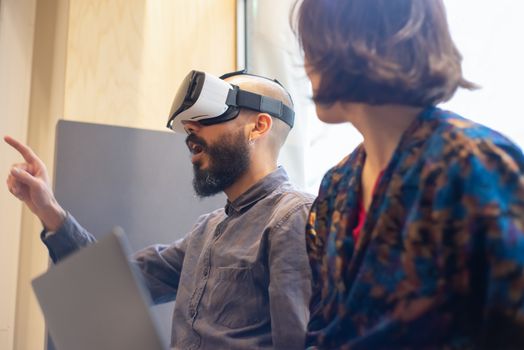
A man with a beard and a woman exploring virtual reality using a headset indoors.Photo: Kampus Production / Pexels
Virtual reality (VR) technology has come a long way since its early, clunky prototypes. What was once the realm of science fiction and niche gaming is rapidly transforming into a powerful tool with applications spanning across numerous industries. The initial perception of VR as merely a gaming peripheral is quickly dissolving, giving way to a recognition of its profound potential in areas like education, healthcare, engineering, and social interaction. This shift is driven by a confluence of technological advancements, including more powerful and accessible hardware, sophisticated software development, and a growing understanding of human-computer interaction in three-dimensional spaces. One of the most significant evolutions lies in the hardware itself. Early VR headsets were often tethered to powerful PCs, limiting mobility and increasing setup complexity. Today, standalone VR headsets like the Meta Quest series offer remarkable freedom, integrating processing power directly into the headset. This untethered experience is crucial for broader adoption, as it removes significant barriers to entry for casual users and professionals alike. Furthermore, display technologies are advancing rapidly, moving towards higher resolutions, wider fields of view, and reduced screen-door effects, making virtual worlds feel more real and less like looking through a pixelated mesh. Innovations such as micro-OLED displays and pancake optics are paving the way for lighter, more comfortable, and visually stunning devices. Beyond the visual, the future of virtual reality technology is deeply intertwined with enhanced sensory feedback. Haptic technologies, which simulate touch and force, are becoming increasingly sophisticated. Imagine not just seeing a virtual object but feeling its texture, weight, or impact. Full-body tracking systems, often employing external sensors or even camera-based solutions, are enabling more natural and intuitive movement within VR. This moves beyond simple hand controllers to allow users to use their entire body as an input device, enhancing immersion and utility, especially in training simulations or collaborative virtual environments. The integration of advanced audio, including spatial audio that accurately mimics real-world sound propagation, further deepens the sense of presence. Crucially, the development of VR is not happening in isolation. It is part of a larger ecosystem of immersive technologies, including augmented reality (AR) and mixed reality (MR), collectively known as extended reality (XR). While VR fully immerses users in a digital world, AR overlays digital information onto the real world, and MR blends the two seamlessly. The lines between these technologies are blurring, and future devices are likely to offer capabilities that fluidly transition between them, providing a spectrum of immersive experiences tailored to different needs. This convergence promises a future where digital and physical realities are not separate but interconnected, offering unprecedented ways to interact with information and each other. The ongoing research into brain-computer interfaces (BCIs) also holds immense promise, potentially allowing users to control virtual environments with their thoughts, further dissolving the barrier between mind and machine. These foundational advancements are setting the stage for VR's true breakout into mainstream consciousness and transforming how we live, work, and play. For a deeper dive into how these technologies are converging, explore articles on extended reality applications.

Transformative Applications: Industry-Specific Innovations
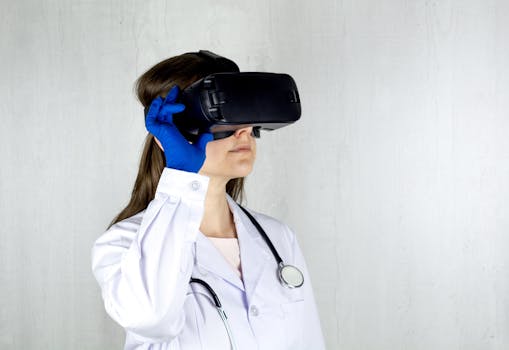
Doctor in a lab coat exploring virtual reality technology with goggles.Photo: Michael Berdyugin / Pexels
The future of virtual reality technology extends far beyond entertainment, with profound implications for virtually every industry. In healthcare, VR is revolutionizing training for surgeons, allowing them to practice complex procedures in a risk-free, highly realistic environment. It's also being used for pain management, distracting patients during uncomfortable treatments, and for physical and cognitive rehabilitation, offering engaging and measurable therapeutic exercises. Medical students can explore human anatomy in 3D, gaining insights impossible with traditional textbooks or even cadavers. Telemedicine could also see a VR-powered evolution, allowing doctors to consult with patients in a shared virtual space, potentially enhancing diagnostic accuracy and patient comfort. Education stands to be one of the most significantly impacted sectors. Imagine history lessons where students can walk through ancient Rome, science classes where they dissect a virtual frog, or astronomy lessons where they navigate the solar system. VR provides experiential learning opportunities that are far more engaging and memorable than traditional methods. It can democratize access to high-quality educational resources, allowing students in remote areas to experience virtual field trips or access specialized labs. Corporate training is another booming area, with VR offering realistic simulations for high-stakes situations, from airline pilot training to emergency response drills, reducing costs and risks associated with real-world training scenarios. Employees can practice customer service interactions, operate heavy machinery, or learn complex software in a safe, repeatable virtual environment. In the realm of architecture, engineering, and construction (AEC), VR is transforming design, visualization, and collaboration. Architects can walk clients through proposed buildings before they are even built, allowing for real-time feedback and modifications. Engineers can test designs and identify potential flaws in a virtual prototype, saving significant time and resources. Construction teams can plan logistics and safety procedures in a virtual model of the job site. This ability to visualize and interact with designs in a 1:1 scale dramatically improves decision-making and reduces costly errors during the physical construction phase. The retail and e-commerce sectors are also exploring the power of VR to create immersive shopping experiences. Customers could virtually try on clothes, explore product showrooms, or even design custom items in a 3D environment before making a purchase. This not only enhances the shopping experience but can also reduce returns by providing a more accurate representation of products. Even social interaction is being redefined, with the rise of virtual meeting spaces and social platforms where users can connect and collaborate as avatars, breaking down geographical barriers and fostering a new sense of community. The integration of AI into these virtual environments will further personalize and enhance these experiences, creating intelligent virtual assistants and dynamic, responsive worlds that adapt to user behavior.

Challenges and Ethical Considerations in VR Advancement

While the future of virtual reality technology is undeniably bright, its rapid advancement also brings forth a unique set of challenges and ethical considerations that must be addressed for its healthy and responsible development. One of the primary technical hurdles remains the issue of motion sickness, often referred to as 'cybersickness.' While significant progress has been made with higher refresh rates, reduced latency, and improved tracking, some users still experience discomfort. Continued research into display technologies, rendering techniques, and individual physiological responses is essential to create universally comfortable experiences. Another technical challenge involves achieving truly photorealistic graphics on standalone devices without compromising performance or battery life, demanding continued innovation in mobile chipsets and optimization techniques. Beyond the technical, the cost of high-fidelity VR hardware remains a barrier to widespread adoption for many consumers. While entry-level headsets are becoming more affordable, the premium experiences often require significant investment. As manufacturing scales and technology matures, prices are expected to drop, but ensuring accessibility for all potential users is crucial for VR to reach its full potential. The development of robust, user-friendly content creation tools is also vital. The ecosystem needs more developers creating diverse and compelling experiences to attract and retain a broad user base. Ethical considerations are perhaps even more complex. Privacy is a paramount concern. VR systems collect vast amounts of data, including eye-tracking information, body movements, and potentially even biometric data. How this data is collected, stored, used, and protected is a critical issue that requires stringent regulations and transparent policies. The potential for manipulation or exploitation through highly immersive and persuasive virtual environments also needs careful consideration. Questions arise about digital ownership, intellectual property within virtual worlds, and the legal frameworks governing actions taken by avatars. Furthermore, the psychological impact of prolonged VR use is an area of ongoing research. Concerns about potential addiction, the blurring of lines between reality and virtuality, and the effects on mental health need to be thoroughly investigated. Ensuring responsible design that prioritizes user well-being, including features to prevent overuse and promote healthy engagement, will be essential. The potential for deepfakes and misinformation within hyper-realistic virtual environments presents another significant societal challenge. As VR becomes more ubiquitous, establishing clear ethical guidelines, fostering digital literacy, and developing robust safeguards will be critical to harness its transformative power while mitigating its risks. These discussions are paramount to shaping a future where VR enhances human experience responsibly. You can learn more about the broader implications of emerging technologies by exploring resources on digital ethics.

The Road Ahead: Key Trends and Predictions for VR

The future of virtual reality technology is poised for exponential growth, driven by several key trends and predictions that will shape its trajectory over the coming decade. One of the most significant trends is the continued convergence of VR with artificial intelligence (AI). AI will not only power more realistic and dynamic non-player characters (NPCs) in virtual worlds but also personalize user experiences, adapt environments based on user behavior, and even assist in content generation. Imagine AI-driven virtual companions that learn your preferences or environments that procedurally generate based on your mood or interests, creating truly unique and infinitely replayable experiences. Another major prediction is the rise of the 'metaverse,' a persistent, interconnected virtual world where users can socialize, work, play, and transact. While the metaverse is still in its nascent stages, VR technology is seen as the primary gateway to accessing and interacting within these digital spaces. This will necessitate greater interoperability between different VR platforms and applications, allowing users to seamlessly transition between various virtual environments with their digital identities and assets. The development of open standards and protocols will be crucial for realizing this vision of a truly interconnected metaverse. Hardware will continue to evolve at a rapid pace. We can expect lighter, more compact headsets with higher resolutions, wider fields of view, and integrated eye-tracking and facial expression tracking becoming standard. This will enable more natural avatar expressions and interactions, enhancing social presence in virtual environments. Haptic feedback will become more nuanced, moving beyond simple vibrations to simulate a wider range of textures, temperatures, and forces. The integration of advanced biosensors within headsets could also allow VR systems to adapt experiences based on a user's physiological state, such as stress levels or emotional responses, opening up new possibilities for therapeutic and wellness applications. Furthermore, the proliferation of 5G and future wireless technologies will be critical for untethered, cloud-rendered VR experiences. This will offload demanding processing tasks from local devices to powerful cloud servers, enabling high-fidelity graphics and complex simulations to be streamed to lightweight headsets with minimal latency. This shift will democratize access to premium VR experiences, making them available to a wider audience without requiring expensive local hardware. Finally, expect to see an explosion in enterprise adoption, as businesses increasingly recognize the efficiency gains and transformative potential of VR for remote work, design collaboration, sales, and employee training. The future of virtual reality technology is not just about entertainment; it's about fundamentally changing how we interact with the digital world and each other.

Comparison

FeatureCurrent VR (2023)Future VR (2030+)Traditional Gaming ConsolesSmartphones (AR)
Resolution2K per eye8K+ per eye4K on TVHD on screen
Field of View90-110 degrees180+ degreesLimited by screenLimited by screen
TrackingHead/Hand (6DOF)Full Body + Eye/Face (6DOF)Controller-basedDevice/Hand (3DOF)
HapticsBasic controller vibrationAdvanced full-body feedbackController vibrationPhone vibration
ConnectivityTethered/WiFi 6EWireless 5G/6G, Cloud-renderedWired/WiFiMobile Data/WiFi
Immersion✓✓✓
Interactivity✓✓✓
CostMedium-HighMedium-Low (relative)MediumLow-Medium

What Our Readers Say

5 ★★★★★

"The latest VR headsets are mind-blowing. I used to think VR was just for games, but seeing how it's used in architectural design and medical training makes me incredibly optimistic about the future of virtual reality technology. The sense of presence is truly transformative."

5 ★★★★★

"I tried a VR experience for pain therapy, and it genuinely helped distract me. The potential for healthcare applications is immense, and I can't wait to see how the future of virtual reality technology evolves to help more people in practical ways."

5 ★★★★★

"As an educator, I've seen firsthand how VR captivates students. They learn complex concepts far more effectively when they can experience them directly. The future of virtual reality technology promises to revolutionize classrooms, making learning truly immersive and engaging."

4 ★★★★☆

"While current VR is impressive, I'm still waiting for truly lightweight, glasses-like devices and more intuitive full-body tracking. The future of virtual reality technology needs to address comfort and seamless interaction for mass adoption, but we're definitely on the right track."

5 ★★★★★

"My company is already using VR for remote collaboration, and it's changed how we work. Being able to 'meet' in a virtual space and interact with 3D models feels like the next best thing to being physically together. The future of virtual reality technology is redefining enterprise efficiency."

Frequently Asked Questions

What are the biggest advancements expected in the future of virtual reality technology?
The biggest advancements are expected in higher resolution displays, wider fields of view, more natural haptic feedback, full-body tracking, and the integration of AI for dynamic content. We'll also see lighter, more comfortable headsets and enhanced wireless capabilities through 5G/6G and cloud rendering.
Is virtual reality still primarily for gaming, or is its scope expanding?
While gaming remains a significant application, VR's scope is rapidly expanding. It's now being widely adopted in healthcare for training and therapy, education for immersive learning, engineering for design and prototyping, and even social interaction and corporate collaboration. Its utility across industries is growing exponentially.
How will the metaverse impact the future of virtual reality technology?
The metaverse is seen as the ultimate destination for VR, acting as a persistent, interconnected virtual world. VR technology will be the primary interface for users to enter and interact within the metaverse, driving demand for more advanced, interoperable, and accessible VR hardware and software to create these shared digital spaces.
Will future VR technology be affordable for the average consumer?
As technology matures and production scales, the cost of VR hardware is expected to become more affordable. While high-end devices may remain premium, entry-level and mid-range options are likely to become more accessible, similar to the evolution of smartphones and gaming consoles, making the future of virtual reality technology available to a broader audience.
How does VR compare to AR (Augmented Reality) in terms of future development?
VR immerses users fully in a digital world, while AR overlays digital content onto the real world. The future will likely see a convergence, with 'mixed reality' devices offering both capabilities seamlessly. Both technologies are advancing rapidly, with VR focusing on deeper immersion and AR on enhancing real-world interaction.
Who stands to benefit most from the future of virtual reality technology?
Virtually everyone stands to benefit. Gamers will get more immersive experiences, professionals in healthcare, engineering, and education will gain powerful training and collaboration tools, and general consumers will find new ways to socialize, learn, and explore. It's a technology with widespread transformative potential.
Are there any risks or ethical concerns associated with the future of VR?
Yes, key concerns include data privacy due to extensive biometric and behavioral data collection, potential for addiction or psychological impact from prolonged immersion, and the ethical implications of deepfakes and misinformation in hyper-realistic virtual environments. Responsible development and regulation are crucial.
What role will AI play in the future of virtual reality technology?
AI will play a pivotal role in creating more dynamic, responsive, and personalized VR experiences. It will power intelligent NPCs, enable procedural content generation for vast worlds, assist in real-time environment adaptation, and enhance user interfaces, making virtual worlds feel more alive and intuitive.

The future of virtual reality technology is unfolding before our eyes, promising a world of unprecedented immersion and interaction. Don't just read about it; prepare to experience the next frontier of digital innovation and discover how VR will reshape our lives.

Topics: future of virtual reality technologyVR advancementsimmersive tech trendsmetaverse evolutionextended reality applications
Leo List
Brampton weed
Adultwork