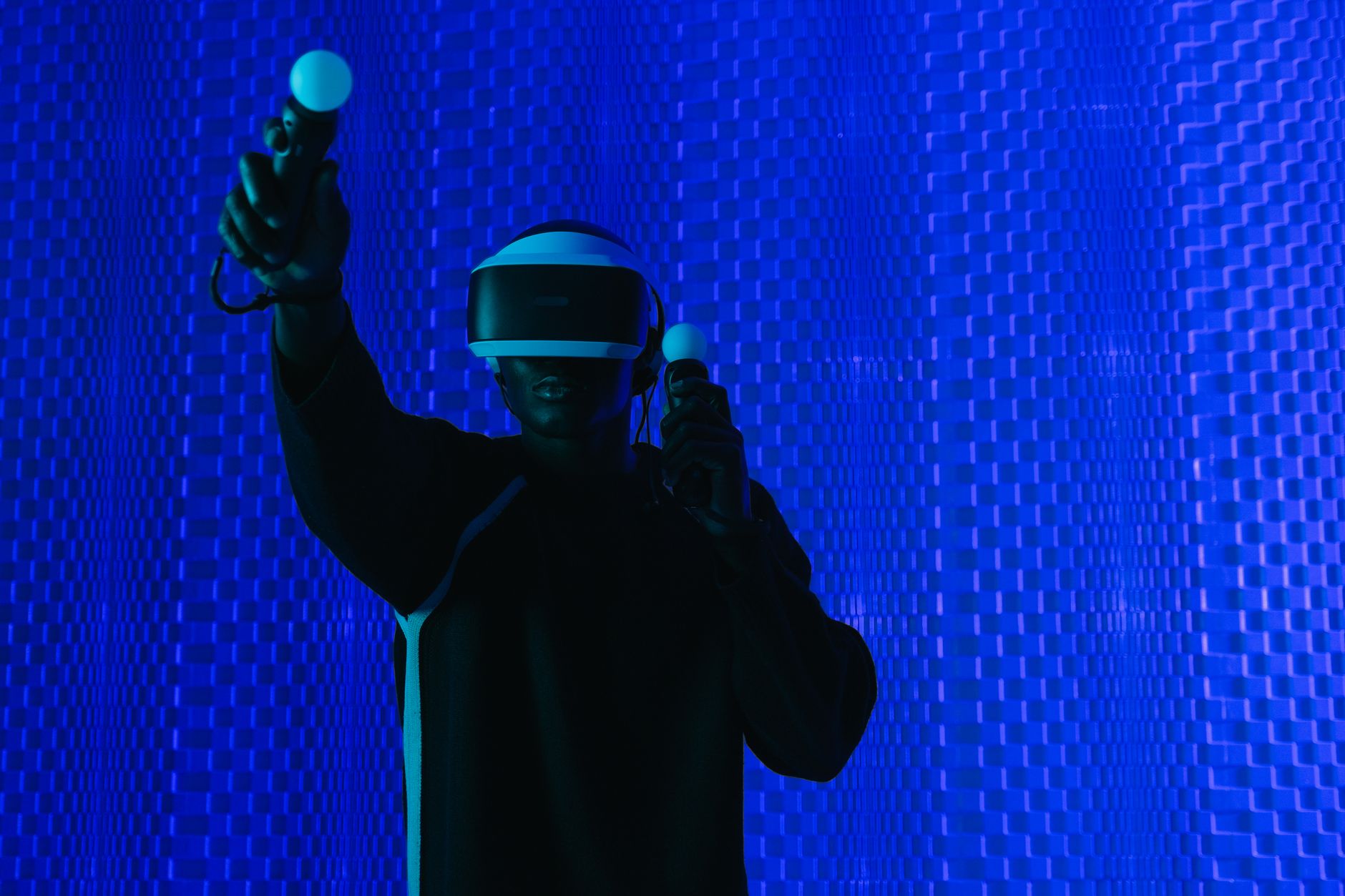
The Future of Virtual Reality Gaming: Beyond Your Wildest Dreams
future of virtual reality gaming

The Future of Virtual Reality Gaming: Beyond Your Wildest Dreams

Immerse yourself in a world where digital experiences are indistinguishable from reality, redefining entertainment as we know it.

Dive Into Tomorrow's Gaming

Key Takeaways

  • ✓ VR gaming market projected to reach over $100 billion by 2028.
  • ✓ Haptic feedback and full-body tracking are becoming mainstream.
  • ✓ Cloud VR will democratize access to high-fidelity experiences.
  • ✓ AI-powered NPCs and dynamic environments will create unparalleled immersion.

How It Works

1
Advanced Headsets & Displays

Next-generation VR headsets will feature lighter designs, wider fields of view, and micro-OLED or QLED displays for stunning visual fidelity. Eye-tracking and foveated rendering will optimize performance and realism.

2
Enhanced Immersion & Interaction

Haptic suits, gloves, and even full-body tracking systems will allow players to feel and interact with virtual worlds like never before. This includes sensing temperature, texture, and physical impacts within the game.

3
Intelligent AI & Dynamic Worlds

Artificial intelligence will power more realistic and adaptive non-player characters (NPCs) and procedural content generation. Game worlds will react dynamically to player actions, creating truly unique experiences.

4
Seamless Connectivity & Metaverse Integration

High-bandwidth internet and 5G will enable cloud-based VR, reducing hardware requirements and facilitating massive multiplayer online (MMO) VR experiences. Interoperable metaverse platforms will connect diverse virtual worlds.

The Evolution of Virtual Reality Gaming Hardware: Beyond the Headset
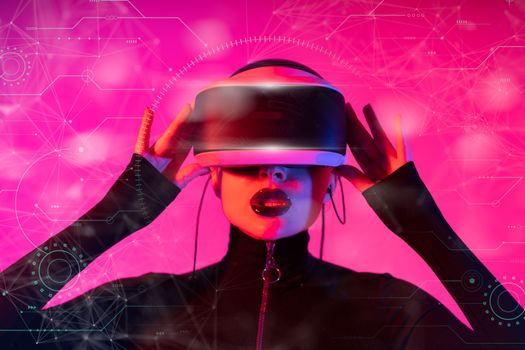
A stylish woman interacts with futuristic VR technology in a vibrant setting. Photo: Atlantic Ambience / Pexels
The journey into the future of virtual reality gaming begins with its foundational hardware. While current VR headsets like the Meta Quest 3, PlayStation VR2, and Valve Index offer compelling experiences, they represent just the nascent stages of what's to come. The next wave of VR hardware will push boundaries in ways that promise to blur the lines between the digital and physical. Imagine headsets that are as lightweight and comfortable as a pair of sunglasses, yet capable of rendering photorealistic environments. This isn't science fiction; it's the trajectory of current research and development. Key advancements will focus on display technology. We're moving beyond traditional LCDs and OLEDs towards micro-OLED and QLED, offering significantly higher pixel densities, true blacks, and vibrant colors with minimal screen-door effect. Resolutions will climb, leading to visual fidelity that makes individual pixels invisible, creating an illusion of seamless reality. Furthermore, foveated rendering, already present in some high-end devices, will become standard. This technique uses eye-tracking to render the area you're directly looking at in maximum detail, while intelligently lowering the resolution in your peripheral vision. This dramatically reduces the computational power required, allowing for more complex graphics without sacrificing frame rate. The integration of advanced optics, such as pancake lenses, will enable thinner, lighter headsets with wider fields of view, making the experience more natural and less claustrophobic. Beyond the visual, the sensory input will be revolutionized. Haptic feedback is moving beyond simple rumble controllers. We're seeing the development of sophisticated haptic gloves that can simulate texture, temperature, and pressure. Imagine feeling the coarse bark of a virtual tree, the chill of a digital breeze, or the impact of a bullet vest. Full-body tracking systems, currently niche and often cumbersome, will become more integrated and discreet, potentially woven into specialized clothing or utilizing advanced camera-based tracking. This will allow for incredibly precise avatar representation and interaction, translating every nuance of your physical movement into the virtual world. The combination of hyper-realistic visuals and tactile feedback will create an unparalleled sense of presence, making virtual worlds feel truly tangible. This leap in hardware capability is not just about better graphics; it's about fundamentally changing how we perceive and interact with digital spaces, making them feel as real as our own.Learn more about emerging tech in VR.

Immersive Gameplay and Interactive Narratives: The Soul of Next-Gen VR
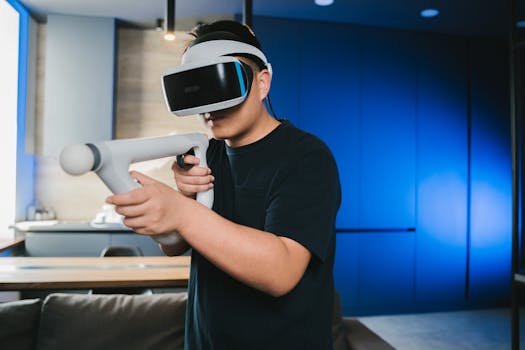
A man using a virtual reality headset and controller for an immersive gaming experience at home. Photo: Tima Miroshnichenko / Pexels
While hardware provides the canvas, immersive gameplay and interactive narratives paint the picture of the future of virtual reality gaming. The industry is rapidly moving beyond traditional game design paradigms, leveraging VR's unique capabilities to create experiences impossible on flat screens. The core of this evolution lies in enhancing presence – the feeling of truly being 'there' within a virtual environment. This goes beyond visual fidelity; it encompasses how players interact with the world, how the world reacts to them, and the emotional resonance of the narrative. One significant area of growth is the development of AI-powered non-player characters (NPCs). Current NPCs often follow predictable scripts, but future VR games will feature AI that learns from player behavior, adapts dialogue, and even develops rudimentary personalities. Imagine a game where an NPC remembers your past interactions, reacts to your tone of voice, or even forms an emotional bond with you. This will lead to dynamic storytelling, where player choices have far-reaching and unpredictable consequences, making each playthrough unique. Procedural content generation, already used in games like No Man's Sky, will be supercharged in VR, creating vast, unique, and ever-changing worlds that feel genuinely unexplored. This means less repetitive content and more emergent gameplay opportunities. The integration of voice AI will also play a crucial role. Instead of relying solely on button presses or gaze selection, players will be able to speak naturally to characters, issue commands, and influence the narrative through verbal interaction. This natural interface will break down barriers between the player and the virtual world, enhancing immersion significantly. Furthermore, the concept of 'adaptive difficulty' will evolve, with AI analyzing player skill and emotional state in real-time to tailor challenges and narrative beats, ensuring a constantly engaging experience without frustration or boredom. The ultimate goal is to create narratives that are not just consumed, but actively lived, where the player is not just a participant but the central, driving force of an unfolding story. This profound shift in gameplay design, fueled by advanced AI and a deep understanding of human psychology, will define the next generation of VR gaming. It's about creating memories, not just playing games.

The Metaverse and Multiplayer Experiences: Connecting Virtual Worlds

A stylish woman interacts with futuristic VR technology in a vibrant setting. Photo: Atlantic Ambience / Pexels
The future of virtual reality gaming is inextricably linked with the concept of the metaverse, promising a connected ecosystem of virtual worlds and experiences. While the term 'metaverse' is often broadly applied, its implications for VR gaming are profound: it envisions a persistent, shared, 3D virtual space where users can interact with each other, digital assets, and AI-driven environments across different platforms and applications. This represents a significant evolution from current siloed multiplayer VR games, moving towards a more unified and expansive digital existence. The rise of cloud VR will be a critical enabler for this vision. By streaming high-fidelity VR experiences from powerful remote servers, cloud VR significantly lowers the hardware barrier to entry. Players will no longer need expensive, top-tier PCs to enjoy cutting-edge VR games; a stable internet connection and a capable headset will suffice. This democratization of access will massively expand the player base and facilitate the creation of truly massive multiplayer online (MMO) VR experiences, where thousands or even millions of players can coexist and interact within a single persistent world. Imagine colossal virtual concerts, sprawling digital cities, or epic battles involving entire communities, all rendered seamlessly. Interoperability will be a cornerstone of the metaverse. This means that avatars, digital assets (like virtual clothing or game items), and even entire virtual spaces could potentially be transferred and utilized across different metaverse platforms and games. Blockchain technology and NFTs (Non-Fungible Tokens) are being explored as mechanisms to facilitate true digital ownership and portability of these assets, giving players more control and investment in their virtual identities and possessions. This could lead to a thriving digital economy within the metaverse, where players can earn, trade, and create value. The social aspect will be paramount; the metaverse aims to replicate and enhance real-world social dynamics in a virtual setting, allowing friends to meet, collaborate, and share experiences regardless of their physical location. The future isn't just about playing games; it's about living in games, building communities, and forging new forms of social interaction within interconnected virtual realities. Discover more about the metaverse's potential.

Challenges and Opportunities: Navigating the Path to VR's Golden Age
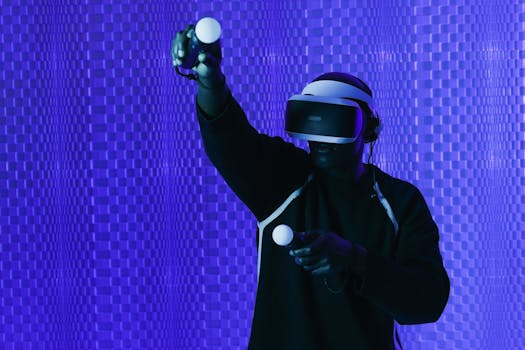
A man engaged in a virtual reality experience wearing VR goggles, holding controllers. Photo: SHVETS production / Pexels
Despite the immense potential, the future of virtual reality gaming is not without its challenges. Addressing these hurdles will be crucial for VR to truly enter its golden age and achieve mainstream adoption. However, each challenge also presents a significant opportunity for innovation and growth within the industry. **Challenges:** * **Cost of Entry:** While cloud VR aims to mitigate this, high-end VR headsets and accessories can still be expensive, limiting accessibility for many potential users. The development of more affordable, yet powerful, standalone headsets is vital. * **Motion Sickness (Cybersickness):** This remains a significant barrier for some users. Ongoing research into display technologies, optimized rendering techniques, and user comfort features (like improved refresh rates and reduced latency) are crucial to minimize this issue. * **Content Library and Quality:** While steadily growing, the VR gaming library still lacks the breadth and depth of traditional flat-screen gaming. Developers need robust tools and financial incentives to create compelling, long-form VR experiences that justify the hardware investment. * **User Experience (UX) and Onboarding:** VR interfaces can be less intuitive for newcomers. Simplifying setup, navigation, and interaction within virtual environments is essential for broader appeal. * **Social Acceptance and Public Perception:** VR is still often perceived as a niche or isolating technology. Changing this perception requires showcasing VR's social potential and its ability to connect people. **Opportunities:** * **Esports and Competitive Gaming:** VR offers unique competitive opportunities, from highly physical games to strategic titles that leverage immersive environments. Dedicated VR esports leagues could emerge as a major spectator sport. * **Location-Based VR (LBVR):** Arcades and dedicated VR centers offer premium, high-end experiences that are too expensive for home use. This segment can act as a gateway for new users and a testing ground for advanced tech. * **Cross-Platform Development:** As VR ecosystems mature, seamless cross-play between different headsets and even traditional platforms (where appropriate) will expand player bases and foster community. * **Health and Wellness Applications:** Beyond pure entertainment, VR gaming can integrate elements of physical exercise, cognitive training, and even therapy, adding significant value and broader appeal. * **Accessibility Features:** Designing VR games with robust accessibility options will ensure a wider audience can enjoy these experiences, from those with physical limitations to cognitive challenges. Overcoming these challenges will require concerted effort from hardware manufacturers, software developers, and platform providers. However, the potential rewards – a truly immersive and transformative entertainment medium – are well worth the investment.

Comparison

FeatureBest Option (Future VR)Alternative 1 (Current High-End VR)Alternative 2 (Current Standalone VR)
Display ResolutionMicro-OLED, 8K+OLED/LCD, 4KLCD, 2K
Field of View (FoV)180°+110°-120°90°-100°
Haptic FeedbackFull-body suit, glovesController vibrationController vibration
Eye Tracking/Foveated RenderingSome (PSVR2, Varjo)
Wireless/Standalone✓ (Cloud VR)Tethered/PC VR
AI-Powered NPCsAdvanced, adaptiveBasic scriptingBasic scripting
Cost (Estimated)High initial, lower long-termHighMedium

What Readers Say

"The thought of feeling the rain in a virtual world or the recoil of a weapon without bulky gear is just mind-blowing. The future of virtual reality gaming promises an escape unlike anything we've ever experienced before."

Alex Chen · Seattle, WA

"I'm excited for the day when VR games have truly intelligent NPCs. Imagine a narrative that adapts to your every decision, making every playthrough feel like a unique, personal story. That's the future of virtual reality gaming I want!"

Maria Rodriguez · Austin, TX

"Cloud VR is going to be a game-changer. No more needing a super expensive PC just to enjoy the latest VR titles. This will finally make the future of virtual reality gaming accessible to everyone, not just a select few."

David Kim · New York, NY

"While the technological advancements sound incredible, I'm cautiously optimistic. I hope developers focus on compelling content and social integration, not just flashy tech, to truly realize the future of virtual reality gaming."

Sarah Lee · Los Angeles, CA

"As a game developer, the tools and possibilities emerging for the future of virtual reality gaming are inspiring. We're on the cusp of creating truly living, breathing digital worlds that players can inhabit and shape."

John Miller · Miami, FL

Frequently Asked Questions

What is the most anticipated advancement in the future of virtual reality gaming?

Many experts point to the integration of advanced haptic feedback systems and hyper-realistic visual displays as the most anticipated advancements. These technologies promise to create an unparalleled sense of presence, allowing players to not only see and hear virtual worlds but also feel them, blurring the lines between reality and simulation.

Will virtual reality gaming ever fully replace traditional gaming?

It's unlikely that VR gaming will fully replace traditional flat-screen gaming. Instead, it's more probable that VR will evolve into a distinct, premium gaming segment offering unique experiences that complement traditional gaming. Just as movies didn't replace theater, VR will carve its own niche, appealing to those seeking deeper immersion and new forms of interaction.

How can I prepare for the future of virtual reality gaming?

To prepare, consider investing in a current-generation standalone VR headset to familiarize yourself with the technology and its potential. Staying updated on tech news, especially regarding display advancements, haptics, and cloud gaming services, will also keep you informed. Most importantly, embrace the idea of new forms of interaction and storytelling.

How much will future virtual reality gaming experiences cost?

The cost of future VR gaming experiences will likely vary. While high-end, cutting-edge hardware may initially be expensive, cloud VR services are expected to lower the barrier to entry by reducing the need for powerful local PCs. Game prices will likely align with current AAA titles, with potential subscription models for metaverse access or exclusive content.

How will the future of virtual reality gaming differ from the metaverse?

The future of virtual reality gaming is a component within the broader concept of the metaverse. VR gaming focuses specifically on immersive entertainment experiences. The metaverse, however, is a more expansive, persistent, and interconnected virtual space that encompasses not just gaming, but also social interaction, work, commerce, and education, often accessible through various devices, including VR.

Who should be excited about the future of virtual reality gaming?

Anyone who loves immersive storytelling, wants to interact with digital worlds in new ways, or dreams of feeling truly 'inside' a game should be excited. This includes hardcore gamers, tech enthusiasts, social butterflies looking for new connection methods, and even those interested in fitness or educational applications within a gaming context.

Are there any health risks associated with the future of virtual reality gaming?

As VR technology advances, efforts are being made to mitigate current risks like motion sickness and eye strain. Future headsets will likely feature improved optics, higher refresh rates, and personalized calibration to enhance comfort. Responsible design will also include guidelines for breaks and safe play, similar to traditional gaming. As with any technology, moderation and adherence to best practices will be key.

What major trends will shape the future of virtual reality gaming?

Major trends include the widespread adoption of haptic feedback and full-body tracking, the rise of AI-powered dynamic content and NPCs, the expansion of cloud VR for accessibility, and the increasing integration into a persistent, interoperable metaverse. These trends will collectively push VR gaming towards unprecedented levels of realism and interactivity.

The future of virtual reality gaming is not just an evolution; it's a revolution. Prepare to step into worlds that defy imagination, where every sense is engaged, and every decision matters. Don't just play the game – live it.

Topics: future of virtual reality gamingVR advancementsimmersive gaminghaptic feedback VRmetaverse gaming
Leo List
Brampton weed
Adultwork EstrelaBet Vai de Bet R7 Bet Betão Galera Bet Rainbet Bet9ja Shop SportyBet BetKing Sisal Loto Foot Hollywoodbets YesPlay Odibets RushBet Jugabet BetWarrior BetCity MSport betPawa Fortebet