Unlocking the Future of Autonomous Vehicles Technology
future of autonomous vehicles technology

Unlocking the Future of Autonomous Vehicles Technology

Discover how self-driving innovations are reshaping transportation, safety, and urban living for a revolutionary tomorrow.

Explore the Road Ahead

Key Takeaways

  • ✓ Autonomous vehicles are categorized into 6 levels (0-5) based on automation, with Level 5 being fully driverless.
  • ✓ The global autonomous vehicle market is projected to reach over $200 billion by 2030.
  • ✓ AI and machine learning are foundational to the perception, decision-making, and control systems of self-driving cars.
  • ✓ Major challenges include regulatory frameworks, ethical dilemmas, cybersecurity, and public acceptance.
  • ✓ Autonomous trucking and last-mile delivery are expected to be early widespread applications.

How It Works

1
Perception & Sensing

Vehicles use an array of sensors (LiDAR, radar, cameras, ultrasonic) to create a 360-degree understanding of their surroundings. This data is continuously processed to detect objects, pedestrians, and other vehicles.

2
Localization & Mapping

High-definition maps combined with GPS and sensor data allow the vehicle to precisely determine its own position. This accuracy is crucial for safe navigation and adherence to lane markings.

3
Path Planning & Prediction

Advanced algorithms predict the behavior of other road users and plan the optimal path, speed, and maneuvers. This involves real-time decision-making to navigate traffic and potential hazards.

4
Control & Actuation

Once a path is planned, the vehicle's control systems translate these decisions into physical actions. This includes steering, acceleration, braking, and signaling, executed with precision and responsiveness.

The Transformative Landscape of Self-Driving Cars Evolution
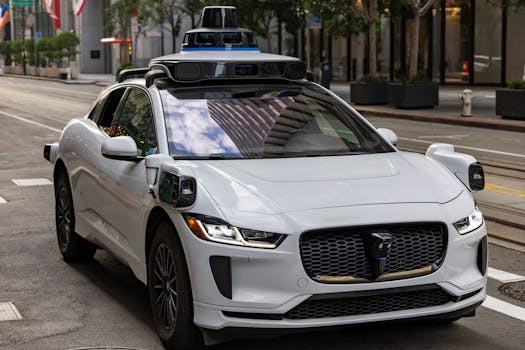
A white autonomous vehicle navigating a city street, reflecting urban architecture in daylight. Photo: Stephen Leonardi / Pexels
The journey towards fully autonomous vehicles has been a fascinating and complex one, moving from theoretical concepts to tangible prototypes and limited deployments. When we discuss the future of autonomous vehicles technology, we are not just talking about cars that drive themselves; we are envisioning a complete paradigm shift in transportation, urban planning, and even societal structures. The evolution of self-driving cars can be traced through several distinct phases, each building upon the last in terms of technological sophistication and capability. Initially, the focus was on advanced driver-assistance systems (ADAS) like adaptive cruise control and lane-keeping assist, which serve as foundational building blocks. These early innovations, while not fully autonomous, introduced concepts of sensor fusion and automated control that are now indispensable for higher levels of autonomy. The progression from Level 0 (no automation) to Level 5 (full automation) as defined by the SAE International standards provides a clear roadmap of this evolution, highlighting the increasing responsibility shifting from the human driver to the vehicle's AI. Currently, many vehicles on the road offer Level 2 or Level 3 capabilities, meaning they can handle certain driving tasks under specific conditions but still require human supervision or intervention. The leap to Level 4 and Level 5 is where the true revolutionary potential lies, promising vehicles that can operate without any human input in defined operational design domains (ODDs) or even universally. This evolution is driven by relentless advancements in artificial intelligence, sensor technology, and computational power. Machine learning algorithms, particularly deep learning, are enabling vehicles to perceive and understand their environment with unprecedented accuracy, recognizing objects, predicting behaviors, and making complex decisions in real-time. The integration of high-resolution cameras, sophisticated LiDAR systems, and robust radar sensors provides a comprehensive sensory input that far surpasses human capabilities in terms of 360-degree awareness and object detection in varying conditions. Furthermore, the development of high-definition maps, constantly updated with precise road data, plays a critical role in localization and navigation, allowing autonomous vehicles to pinpoint their exact location within centimeters. This intricate interplay of hardware and software is what makes the vision of a truly self-driving future increasingly plausible. As these technologies mature, we can anticipate a future where traffic congestion is significantly reduced, road accidents become a rarity, and personal mobility is democratized for a wider demographic, including the elderly and those with disabilities. The economic implications are equally profound, with potential for increased productivity as commuters reclaim travel time, and logistics operations becoming more efficient through automated trucking. The challenges, though substantial, are being tackled by a global consortium of automakers, tech giants, and startups, all vying to define the next chapter in transportation. The future of autonomous vehicles technology is not merely an incremental improvement; it is a fundamental reimagining of how we move, interact, and live within our communities. Understanding the core technologies behind this shift is essential for appreciating its full impact.

Cutting-Edge AI in Automotive: Powering Driverless Innovation
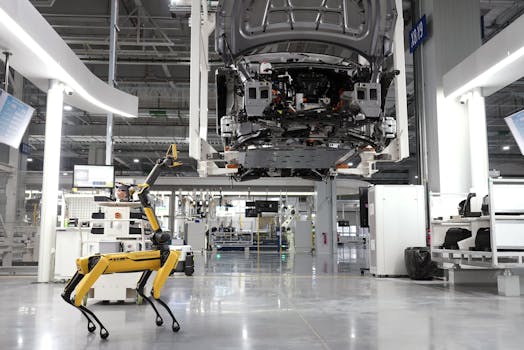
A robotic dog oversees an automated car assembly in a high-tech factory setting. Photo: Hyundai Motor Group / Pexels
At the heart of the future of autonomous vehicles technology lies artificial intelligence, a discipline that has undergone a dramatic transformation in recent years, directly impacting the capabilities of self-driving cars. AI in automotive is not a singular technology but a complex ecosystem of algorithms, neural networks, and data processing techniques designed to mimic and surpass human cognitive functions related to driving. The perception stack, for instance, relies heavily on computer vision, where deep learning models analyze camera feeds to identify traffic lights, road signs, lane markings, pedestrians, and other vehicles. These models are trained on vast datasets, allowing them to generalize across diverse scenarios and varying environmental conditions, from bright sunshine to heavy rain or snow. Beyond visual perception, AI algorithms integrate data from LiDAR (Light Detection and Ranging) and radar sensors to create a detailed 3D model of the vehicle's surroundings, detecting distances, velocities, and object shapes with high precision. This sensor fusion is critical for robust perception, as it provides redundancy and allows the vehicle to overcome limitations of individual sensor types. For example, radar performs well in adverse weather where cameras might struggle, while LiDAR offers superior depth perception. The decision-making process within an autonomous vehicle is another area where AI shines. Path planning algorithms, often leveraging techniques like reinforcement learning, consider numerous factors—traffic flow, road conditions, speed limits, and the predicted movements of other road users—to determine the optimal and safest trajectory. These systems must be capable of dynamic replanning in milliseconds, adapting to unexpected events or sudden changes in the environment. Predictive AI models are also crucial for anticipating the actions of pedestrians and other drivers, enhancing safety by allowing the vehicle to react proactively rather than reactively. Furthermore, AI is vital for the vehicle's ability to learn and improve over time. Through continuous data collection and analysis, autonomous systems can identify patterns, refine their algorithms, and enhance their performance. This iterative learning process is often conducted in simulated environments, where vehicles can experience millions of miles of driving scenarios in a fraction of the time it would take in the real world, allowing for rapid iteration and validation of software updates. The challenges, however, are immense. Ensuring the interpretability and explainability of AI decisions is paramount, especially in critical safety situations. The development of robust and verifiable AI systems that can operate reliably in unpredictable real-world environments is an ongoing research frontier. Additionally, cybersecurity for AI-driven systems is a critical concern, as any compromise could have severe consequences. Despite these hurdles, the advancements in AI are undeniably propelling the future of autonomous vehicles technology, promising a level of driving intelligence and safety that was once confined to science fiction. The symbiotic relationship between powerful AI and sophisticated hardware is unlocking new possibilities for autonomous mobility, promising a future where intelligent vehicles seamlessly integrate into our daily lives and revolutionize how we commute, travel, and conduct logistics. This intelligent backbone is what promises to make our roads safer and more efficient.

Navigating the Future: Smart Transportation Systems and Infrastructure

Vibrant night scene of Shanghai's cityscape with dynamic light trails and skyscrapers. Photo: Nektarios Moutakis / Pexels
The realization of the full potential of the future of autonomous vehicles technology extends far beyond individual vehicles; it necessitates a complete overhaul and integration with smart transportation systems and urban infrastructure. Autonomous vehicles are not designed to operate in isolation but as integral components of a larger, interconnected ecosystem. This ecosystem involves sophisticated communication networks, intelligent traffic management systems, and smart city infrastructure that can interact seamlessly with self-driving cars. Vehicle-to-everything (V2X) communication, encompassing V2V (Vehicle-to-Vehicle), V2I (Vehicle-to-Infrastructure), V2P (Vehicle-to-Pedestrian), and V2N (Vehicle-to-Network), is a cornerstone of this interconnected future. V2X technology allows autonomous vehicles to share real-time data with each other, with traffic lights, road sensors, and even with pedestrians' smartphones. This constant exchange of information can significantly enhance situational awareness, enabling vehicles to anticipate hazards around blind corners, receive updates on traffic congestion ahead, or be alerted to emergency vehicles approaching. Imagine a scenario where traffic lights dynamically adjust their timing based on real-time traffic flow data received from autonomous vehicles, optimizing throughput and minimizing delays. Or where a self-driving car can be warned of a pedestrian stepping onto the road from behind a parked vehicle, even before its own sensors can detect them. Such capabilities are not just futuristic dreams; they are actively being developed and tested. Smart infrastructure, equipped with sensors, cameras, and communication modules, will play a crucial role in providing additional layers of perception and intelligence to autonomous vehicles. This could include smart roadways that monitor surface conditions, detect potholes, or provide precise localization signals. Charging infrastructure, particularly for electric autonomous vehicles, will also need to be intelligently integrated, allowing for efficient charging opportunities and fleet management. The development of digital twins of urban environments, which are virtual replicas of physical systems, can also aid in the planning and optimization of autonomous vehicle operations, allowing for simulations of various scenarios and the testing of new algorithms without real-world risks. Furthermore, the concept of Mobility-as-a-Service (MaaS) is intrinsically linked to smart transportation systems. Autonomous vehicle fleets, managed by AI-driven platforms, could provide on-demand transportation, reducing the need for individual car ownership, alleviating parking congestion, and offering more equitable access to mobility. This shift could lead to a significant reduction in the number of vehicles on the road, optimizing space usage and leading to more pedestrian-friendly urban environments. The transition to such a system will require substantial investment in infrastructure upgrades, robust cybersecurity measures to protect critical data, and comprehensive urban planning strategies. However, the long-term benefits in terms of reduced congestion, improved safety, environmental sustainability, and enhanced quality of life make these investments indispensable for truly realizing the transformative promise of autonomous mobility. Exploring the broader implications of smart cities reveals just how interconnected these advancements are.

Overcoming Hurdles: Challenges and Ethical Dilemmas in Driverless Car Benefits

Closeup of faceless guy with disposable cup of hot coffee to go in hand sitting in car Photo: Erik Mclean / Pexels
While the potential driverless car benefits are immense, the road to widespread adoption of the future of autonomous vehicles technology is paved with significant challenges and complex ethical dilemmas. These hurdles are not merely technical; they span regulatory, social, and philosophical domains, demanding careful consideration and collaborative solutions from governments, industry, and the public. One of the most pressing challenges is the development of robust and harmonized regulatory frameworks. Currently, regulations vary significantly across states and countries, creating a patchwork of rules that hinder large-scale deployment and testing. Standardizing safety protocols, liability laws, and operational guidelines is crucial to provide clarity for manufacturers and ensure public safety. Without clear legal precedents, questions of responsibility in the event of an accident involving an autonomous vehicle remain ambiguous, deterring both adoption and investment. Public acceptance and trust represent another major hurdle. Despite the promise of enhanced safety, many individuals remain skeptical or fearful of relinquishing control to a machine. High-profile accidents, even if rare, can significantly erode public confidence. Educating the public about the capabilities and limitations of autonomous technology, alongside a consistent track record of safety, will be essential to build widespread trust. Ethical dilemmas pose perhaps the most profound philosophical questions. The 'trolley problem'—where an autonomous vehicle must make a life-or-death decision between two undesirable outcomes—is often cited. Should the car prioritize the occupants, pedestrians, or minimize overall harm? Programming such ethical choices into AI systems is incredibly complex and reflects societal values, which can vary widely. These decisions require a level of moral reasoning that current AI struggles with, and there is no universal consensus on the 'right' answer. **Key Challenges and Ethical Considerations:** * **Regulatory Inconsistencies:** Lack of uniform laws across jurisdictions for testing and deployment. * **Public Trust & Acceptance:** Overcoming skepticism and fear through education and proven safety records. * **Cybersecurity Threats:** Protecting autonomous systems from hacking and malicious attacks that could compromise safety. * **Ethical Decision-Making:** Programming AI to handle unavoidable accident scenarios and prioritize harm. * **Job Displacement:** The impact on professional drivers (truckers, taxi drivers) and the need for workforce retraining. * **Infrastructure Requirements:** The need for significant investment in smart road infrastructure and communication networks. * **System Robustness:** Ensuring reliable operation in all weather conditions and unpredictable environments. Addressing these multifaceted challenges requires a holistic approach, blending technological innovation with thoughtful policy-making and public engagement. Only by confronting these issues head-on can the future of autonomous vehicles technology truly deliver on its promise of a safer, more efficient, and more accessible transportation system for everyone.

Comparison

FeatureLevel 5 AutonomyLevel 3 AutonomyHuman-Driven (Conventional)
Driver InterventionNone required, vehicle handles all tasksRequired in specific scenariosAlways required, full control
Operational DomainAnywhere, any conditionLimited (e.g., highway, specific weather)Anywhere, any condition (human dependent)
Sensor DependenceHigh (LiDAR, Radar, Camera, Ultrasonic)Medium (Radar, Camera, Ultrasonic)Low (human eyes)
Complexity of AIExtremely High (full situational awareness)High (conditional automation)None (human intelligence)
Safety PotentialHighest (reduced human error)Medium (still prone to human error)Varies (prone to human error)
CostVery High (initial)HighMedium
Legal LiabilityPrimarily manufacturer/operatorShared between driver/manufacturerPrimarily driver

What Readers Say

"The advancements in the future of autonomous vehicles technology are truly breathtaking. My research focuses on AI ethics, and seeing how rapidly these systems are evolving to handle complex scenarios is both inspiring and challenging."

Dr. Evelyn Reed · Palo Alto, CA

"I'm a logistics manager, and the prospect of autonomous trucking is a game-changer for efficiency and cost reduction. The future of autonomous vehicles technology will revolutionize supply chains, and I'm excited for its widespread adoption."

Mark Jenkins · Austin, TX

"As someone with mobility challenges, the promise of self-driving cars offers unparalleled freedom. The future of autonomous vehicles technology means I could travel independently, which would be a life-altering result for me and many others."

Sarah Chen · Seattle, WA

"While the safety benefits of autonomous vehicles are clear, I'm still a bit hesitant about giving up full control. The technology needs to prove itself more in diverse, unpredictable urban environments, but I see the immense potential."

David Miller · Boston, MA

"My company is investing heavily in smart city infrastructure, and the future of autonomous vehicles technology is central to our vision. The integration with V2X communication will create truly intelligent transportation networks."

Jessica Lee · Denver, CO

Frequently Asked Questions

What is the most significant benefit of the future of autonomous vehicles technology?

The most significant benefit is the potential for dramatically improved road safety. Autonomous vehicles, free from human error, distraction, or impairment, are projected to reduce traffic accidents by a substantial margin, saving countless lives and preventing injuries annually. This also translates to reduced congestion and environmental impact.

Are self-driving cars truly safe, given recent accident reports?

While isolated incidents have occurred, autonomous vehicle technology is continuously being refined, and companies are investing heavily in rigorous testing and safety protocols. The goal is to achieve a safety record significantly better than human drivers, and statistical data is increasingly showing promising results, especially in controlled environments. Public perception often focuses on rare failures, overlooking the vast majority of safe operational miles.

How will autonomous vehicles communicate with each other and infrastructure?

Autonomous vehicles will primarily communicate using Vehicle-to-Everything (V2X) technologies. This includes Vehicle-to-Vehicle (V2V) for direct communication between cars, and Vehicle-to-Infrastructure (V2I) for exchanging data with smart traffic lights, road sensors, and other urban elements. This real-time data exchange enhances situational awareness and optimizes traffic flow.

Will autonomous vehicles be affordable for the average consumer?

Initially, fully autonomous vehicles are expected to be premium products due to the advanced technology involved. However, as production scales and technology matures, costs are projected to decrease. Furthermore, the rise of Mobility-as-a-Service (MaaS) with autonomous fleets could reduce the need for individual car ownership, making autonomous transportation more accessible and potentially more cost-effective than current car ownership for many.

How do autonomous vehicles compare to advanced driver-assistance systems (ADAS)?

ADAS features like adaptive cruise control or lane-keeping assist are precursors to full autonomy, providing partial automation that still requires driver supervision. Autonomous vehicles, particularly at Level 4 and 5, aim to completely remove the need for human intervention in specific or all driving conditions, representing a fundamental shift in responsibility from human to machine.

Who should embrace the future of autonomous vehicles technology?

The future of autonomous vehicles technology is relevant for a wide range of stakeholders: individuals seeking enhanced mobility and safety, logistics companies aiming for efficiency, urban planners designing smart cities, and tech enthusiasts interested in cutting-edge AI and robotics. Ultimately, it's a technology that promises societal benefits across various sectors.

What are the biggest cybersecurity risks for autonomous vehicles?

The biggest cybersecurity risks include unauthorized access to vehicle control systems, data breaches of personal information, and denial-of-service attacks that could disrupt operations. Robust encryption, secure software updates, and continuous monitoring are crucial to protect against these threats and ensure the integrity and safety of autonomous systems.

What future trends can we expect in autonomous vehicle development?

Expect continued advancements in AI for perception and decision-making, greater integration with smart city infrastructure, the expansion of autonomous ride-sharing and delivery services, and increased focus on ethical AI programming. We'll also see more specialized autonomous applications, such as long-haul trucking and automated public transport, becoming more prevalent.

The future of autonomous vehicles technology is not just around the corner; it's actively being built today. Embrace this transformative journey with us as we explore the innovations that promise a safer, more efficient, and smarter world of transportation. Stay informed and prepare for the revolution on our roads.

Topics: future of autonomous vehicles technologyself-driving cars evolutionAI in automotivesmart transportation systemsdriverless car benefits
Leo List
Brampton weed
Adultwork