The Best Smart Home Devices for Beginners: Your Easy Start
best smart home devices for beginners

The Best Smart Home Devices for Beginners: Your Easy Start

Unlock convenience and efficiency with an effortless introduction to smart home technology, designed for simplicity.

Start Your Smart Home

Key Takeaways

  • ✓ Smart lighting is often the easiest and most impactful first step for beginners.
  • ✓ Smart plugs can instantly upgrade 'dumb' appliances into smart ones.
  • ✓ Voice assistants (like Alexa or Google Assistant) are central to most smart home ecosystems.
  • ✓ Security cameras and video doorbells offer peace of mind with simple installation.

How It Works

1
Choose Your Ecosystem

Decide between Google Home, Amazon Alexa, or Apple HomeKit. This choice influences device compatibility and user experience.

2
Start Small & Simple

Begin with one or two devices like smart plugs or light bulbs. This allows you to learn the ropes without feeling overwhelmed.

3
Connect & Configure

Download the device's app, connect it to your home Wi-Fi, and follow the on-screen instructions. Most setups are designed to be straightforward.

4
Expand & Automate

Once comfortable, add more devices and explore automation routines. Link devices to work together for enhanced convenience and energy savings.

Understanding the Smart Home Landscape for Newcomers
Close-up of a futuristic toy robot with blue eyes, showcasing modern technology indoors. Photo: Pavel Danilyuk / Pexels
Embarking on the journey into smart home technology can seem daunting at first, with a seemingly endless array of devices, protocols, and platforms. However, for beginners, the key is to understand that you don't need to automate your entire house overnight. The best smart home devices for beginners are those that offer immediate, tangible benefits with minimal setup hassle. Think of it as building your smart home brick by brick, starting with foundational pieces that enhance daily life without requiring an engineering degree. The smart home landscape has matured significantly, with user-friendliness now a top priority for manufacturers. This means more intuitive apps, simpler installation processes, and devices that are designed to play well together, even across different brands to some extent. The primary goal for any beginner should be to identify a pain point or an area of their home life they wish to improve. Is it saving energy, enhancing security, or simply adding a touch of convenience? Once you pinpoint this, selecting your first devices becomes much clearer. For instance, if you're concerned about leaving lights on, smart lighting is an obvious first step. If you want to know who's at your door, a video doorbell is a perfect entry point. This article will guide you through the most accessible and impactful smart home devices, ensuring a smooth and enjoyable introduction to the world of home automation. We'll focus on products that are known for their ease of installation, straightforward operation, and broad compatibility, making them ideal choices for anyone just dipping their toes into smart technology. The beauty of modern smart home ecosystems is their scalability. You can start with a single smart bulb and, over time, integrate smart plugs, thermostats, security cameras, and even larger appliances, all controlled from a central app or your voice assistant. This modular approach prevents overwhelm and allows you to learn at your own pace. Moreover, many entry-level devices are surprisingly affordable, debunking the myth that smart homes are exclusively for the tech-savvy or the wealthy. In fact, many smart devices can pay for themselves over time through energy savings or enhanced security. Remember, the best way to approach a smart home for the first time is with curiosity and an open mind, focusing on solutions that genuinely simplify your life. Exploring smart home tech can be a rewarding experience, transforming your living space into a more efficient, secure, and responsive environment.

Essential Starter Devices: Lighting, Plugs, and Voice Assistants
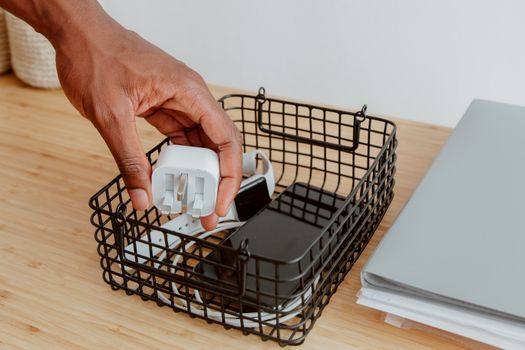
A hand organizing a desk with a basket of electronics including a charger and smartphone. Photo: Ron Lach / Pexels
When curating a list of the best smart home devices for beginners, certain categories consistently rise to the top due to their ease of integration and immediate impact. Smart lighting is arguably the quintessential starting point. Devices like Philips Hue or Sengled Smart Light Bulbs screw into existing fixtures just like traditional bulbs, but they offer a world of new possibilities. Through a simple app on your smartphone, you can control brightness, change colors, set schedules, and even create mood lighting for different occasions. Imagine never having to get out of bed to turn off the lights, or having your lights automatically dim as bedtime approaches. The setup is typically as easy as downloading an app and pairing the bulb, often directly to your Wi-Fi, eliminating the need for a separate hub in many cases. This simplicity makes smart lighting a fantastic gateway into understanding how smart devices communicate and function within your home. Next on the list are smart plugs. These incredibly versatile devices can transform almost any 'dumb' appliance into a smart one. Plug a lamp, a coffee maker, or even a fan into a smart plug, and suddenly you can control it remotely via an app or voice command. Want your coffee brewing as you wake up? Plug your coffee maker into a smart plug and set a schedule. Worried you left the iron on? Check the app and turn it off from anywhere. Brands like TP-Link Kasa or Amazon Smart Plug are celebrated for their straightforward setup and reliability. They connect directly to your home Wi-Fi, and their respective apps are designed with user-friendliness in mind, often guiding you through the pairing process step-by-step. The low cost and high utility of smart plugs make them an undeniable choice for smart home novices. Finally, no discussion of beginner smart home devices would be complete without mentioning voice assistants. Devices like the Amazon Echo Dot or Google Nest Mini serve as the central brain and voice interface for your entire smart home. While not strictly 'devices' in the same way as a light bulb, they are crucial for hands-free control and integrating various smart products. Once you have a voice assistant, you can simply say, "Alexa, turn on the living room lights" or "Hey Google, turn on the coffee maker." They act as a hub for many smart devices, allowing you to control multiple gadgets from different brands through a single command. Setting up a voice assistant is usually a breeze, involving plugging it in, connecting to Wi-Fi through its companion app, and then linking your other smart devices. The power of voice control dramatically enhances the convenience factor of your smart home, making interaction feel natural and effortless. These three categories – smart lighting, smart plugs, and voice assistants – provide a robust and easy-to-manage foundation for any smart home beginner, allowing for exploration and expansion without feeling overwhelmed.

Enhancing Security and Comfort with Beginner-Friendly Smart Devices
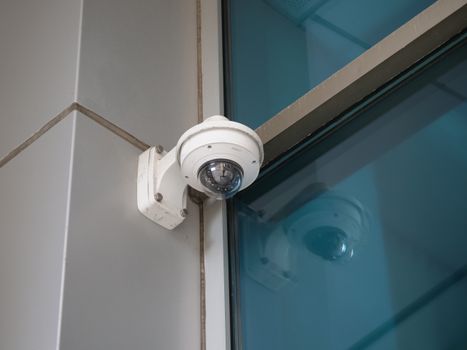
Security camera mounted on a building corner for surveillance and safety. Photo: Giant Asparagus / Pexels
Beyond basic lighting and appliance control, beginners often seek smart home solutions that enhance security and comfort. Fortunately, there are several highly accessible devices in these categories that don't require complex installations or technical expertise. Smart security cameras and video doorbells are prime examples, offering peace of mind with relatively simple setups. For external security, video doorbells like the Ring Video Doorbell or Google Nest Doorbell are excellent choices. They replace your existing doorbell and connect to your home Wi-Fi, allowing you to see, hear, and speak to visitors from anywhere using your smartphone. Most models offer motion detection alerts, two-way audio, and cloud storage for recorded footage (often with a subscription). The installation typically involves basic wiring, or in some cases, a battery-powered option is available for even easier deployment. The immediate benefit of knowing who's at your door, even when you're not home, makes these devices incredibly appealing for beginners looking to boost their home security. Similarly, indoor smart security cameras, such as the Wyze Cam or Arlo Essential Indoor Camera, provide an easy way to monitor pets, children, or simply keep an eye on your home while you're away. These cameras often boast features like night vision, motion detection, and two-way audio, all controllable through a user-friendly app. Many are plug-and-play, requiring only a power outlet and a Wi-Fi connection to get started. They represent a significant step up in home monitoring without requiring professional installation or an expensive security system. For comfort, smart thermostats are an invaluable addition to any smart home, even for beginners. Devices like the Google Nest Thermostat or Ecobee Lite are designed to be intuitive. They allow you to control your home's heating and cooling from your phone, set schedules, and even learn your preferences to optimize energy usage. While installation might involve a bit more than screwing in a light bulb, most smart thermostats come with clear, step-by-step instructions and often offer in-app guides or even video tutorials that walk you through the process, making it manageable for DIY enthusiasts. The potential for significant energy savings and the sheer convenience of adjusting your home's climate from your couch or while on your way home make smart thermostats a highly recommended beginner-friendly device. These security and comfort-focused devices demonstrate how smart home technology can provide tangible benefits beyond mere convenience, making your living space safer and more enjoyable without a steep learning curve. Learning about smart home security can be a crucial step in building a connected home.

Tips for a Smooth Smart Home Start and Common Pitfalls to Avoid
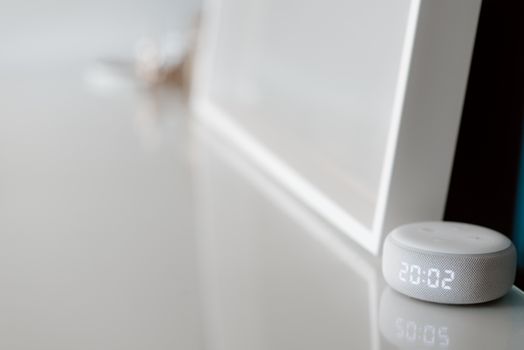
Modern minimalist design featuring an electronic device on a sleek desk. Photo: Anete Lusina / Pexels
Starting your smart home journey should be exciting, not frustrating. Here are some invaluable tips to ensure a smooth experience and common pitfalls to steer clear of: * **Start with a Strong Wi-Fi Network:** Your smart home's backbone is your Wi-Fi. Ensure you have a reliable router and good signal strength throughout your home, especially where you plan to place devices. A weak Wi-Fi signal is the number one cause of smart device connectivity issues. * **Choose a Single Ecosystem (Initially):** While many devices are cross-compatible, starting with a primary ecosystem (Amazon Alexa, Google Home, or Apple HomeKit) simplifies management. This helps you understand how devices interact and avoids compatibility headaches early on. You can always branch out later. * **Read Reviews and Check Compatibility:** Before purchasing, always read user reviews and verify that the device is compatible with your chosen ecosystem and your home's electrical setup (e.g., smart light switch wiring). This prevents unexpected surprises and returns. * **Prioritize Practicality Over Novelty:** While a smart toothbrush might be cool, focus on devices that solve real problems or add significant convenience to your daily routine. This approach ensures your smart home investments are worthwhile. * **Be Patient with Setup:** Even the easiest devices can sometimes have a hiccup during setup. Follow instructions carefully, and don't hesitate to consult online forums or manufacturer support if you get stuck. Persistence pays off. **Common Pitfalls to Avoid:** * **Buying Too Many Devices at Once:** This is a surefire way to get overwhelmed. Start with one or two devices, master them, and then gradually expand. * **Ignoring Privacy and Security Settings:** Smart devices collect data. Take the time to understand and configure privacy settings, strong passwords, and two-factor authentication where available. * **Assuming All Devices Work Together:** While platforms like Alexa and Google Home integrate many brands, not every smart device works with every ecosystem. Always double-check compatibility before buying. * **Forgetting Firmware Updates:** Manufacturers regularly release firmware updates for security patches, bug fixes, and new features. Keep your devices updated to ensure optimal performance and security. * **Over-Automating:** While automation is powerful, too many complex routines can lead to confusion or unexpected behavior. Start with simple automations and build up gradually. By following these tips and avoiding common mistakes, your introduction to smart home technology will be a positive and empowering experience, leading to a more connected and convenient living space.

Comparison

FeatureBest Option (Overall)Alternative 1 (Budget)Alternative 2 (Premium)
Initial Setup DifficultyVery EasyEasyModerate
Voice Assistant IntegrationExcellent (Alexa/Google)Good (Alexa/Google)Excellent (All)
ExpandabilityHighMediumVery High
Cost-EffectivenessHighVery HighMedium
Required HubOften Not NeededNot NeededSometimes
Primary FunctionLighting & PlugsPlugsLighting & Thermostat
Recommended BrandTP-Link Kasa / Philips HueWyze / Amazon Smart PlugEcobee / Arlo

What Readers Say

"I was so intimidated by smart home tech, but starting with smart plugs was a game-changer! These are truly the best smart home devices for beginners, making my lamps smart instantly. Now I can turn off lights from bed."

Sarah J. · Austin, TX

"The Echo Dot combined with a few smart bulbs completely transformed my living room. It was incredibly easy to set up, and now I just tell Alexa what to do. Highly recommend for anyone just starting out."

Mark D. · Seattle, WA

"My Ring Video Doorbell was a breeze to install and immediately gave me peace of mind. I can see packages being delivered and talk to visitors when I'm not home. It's truly one of the best smart home devices for beginners for security."

Emily R. · Denver, CO

"I found the Google Nest Thermostat a little more involved to install than a smart bulb, but the step-by-step app guidance was fantastic. It's already saving me money on AC, so it was worth the slight effort."

Chris T. · Miami, FL

"As a busy mom, automating my lights with Philips Hue has been a lifesaver. Setting schedules and controlling them with my voice means one less thing to worry about. These are truly the best smart home devices for beginners."

Jessica L. · Chicago, IL

Frequently Asked Questions

What are the absolute best smart home devices for beginners to start with?

For absolute beginners, smart plugs and smart light bulbs are highly recommended. They are inexpensive, incredibly easy to install, and provide immediate, tangible benefits. A voice assistant like an Amazon Echo Dot or Google Nest Mini is also crucial for hands-free control and integrating other devices.

Are smart home devices difficult to install and set up?

No, most beginner-friendly smart home devices are designed for ease of use. Many connect directly to your home Wi-Fi and are configured through intuitive smartphone apps with step-by-step instructions. You don't need any special technical skills to get started.

How do I choose between Amazon Alexa, Google Home, and Apple HomeKit?

Consider which ecosystem you already use for other devices or services. Alexa and Google Home generally offer broader device compatibility and are excellent for voice control. Apple HomeKit is often preferred by iPhone users for its strong privacy features and seamless integration within the Apple ecosystem.

Do smart home devices save money or just add convenience?

Many smart home devices can save you money over time. Smart thermostats, for example, can optimize heating and cooling to reduce energy consumption. Smart lighting and plugs can help you avoid wasting electricity by ensuring devices are off when not needed. They offer both convenience and potential savings.

Can I mix and match smart home devices from different brands?

Yes, to a certain extent. Most smart home ecosystems (Alexa, Google Home) are designed to integrate devices from various manufacturers. However, it's always best to check compatibility before purchasing. Starting with devices that explicitly state compatibility with your chosen ecosystem will simplify the process.

Who should consider buying the best smart home devices for beginners?

Anyone looking to add convenience, enhance security, or improve energy efficiency in their home without a steep learning curve. It's perfect for those curious about technology but intimidated by complex setups, or anyone who wants to automate simple daily tasks.

Are smart home devices secure? What about privacy?

Reputable smart home device manufacturers prioritize security, but it's essential to take precautions. Use strong, unique passwords, enable two-factor authentication, and keep device firmware updated. Review privacy settings in companion apps to control data sharing and ensure your information is protected.

What's the next step after I master my first smart home devices?

Once comfortable, you can start exploring automation routines (e.g., lights turning on when you arrive home). Consider adding more devices like smart locks, leak detectors, or integrating your existing smart devices into more complex scenes for enhanced home control and efficiency.

Embarking on your smart home journey doesn't have to be complicated. By starting with the best smart home devices for beginners – smart plugs, lighting, and a voice assistant – you can effortlessly transform your living space. Dive into the world of convenience, security, and efficiency today, and discover how simple it is to make your home smarter.

Topics: best smart home devices for beginnerseasy smart home setupentry-level smart home gadgetssmart home starter kitsimple smart home automation
Leo List

IE Escorts NO Escorts US Escorts NZ Escorts AU Escorts
Brampton weed
Adultwork EstrelaBet Vai de Bet R7 Bet Betão Galera Bet Rainbet Bet9ja Shop SportyBet BetKing Sisal Loto Foot Hollywoodbets YesPlay Odibets RushBet Jugabet BetWarrior BetCity MSport betPawa Fortebet