Affordable 4K Monitors for Gaming: Your Ultimate Guide
affordable 4K monitors for gaming

Affordable 4K Monitors for Gaming: Your Ultimate Guide

Experience breathtaking 4K gaming fidelity and competitive edge without emptying your wallet – it's more accessible than you think.

Find Your Perfect Display

Key Takeaways

  • ✓ 4K resolution offers four times the pixels of 1080p, leading to sharper images.
  • ✓ Higher refresh rates (120Hz+) and low response times (1ms) are crucial for competitive gaming.
  • ✓ Panel types (IPS, VA, TN) impact color accuracy, viewing angles, and response times differently.
  • ✓ Adaptive Sync technologies (FreeSync, G-Sync) eliminate screen tearing for smoother gameplay.

How It Works

1
Understand Your Gaming Needs

Determine if you prioritize competitive speed, cinematic visuals, or a balance of both. This will guide your refresh rate and panel type choices.

2
Set a Realistic Budget Range

Define how much you're willing to spend, keeping in mind that 'affordable' for 4K gaming monitors often means $300-$500 for quality options.

3
Compare Key Specifications

Look for refresh rate, response time, panel type, and adaptive sync support. Don't overlook connectivity options like HDMI 2.1.

4
Read Reviews and Consider Brands

Check reputable tech reviews and user feedback for real-world performance insights. Major brands often offer better support and reliability.

Unlocking the Immersive World of 4K Gaming on a Budget
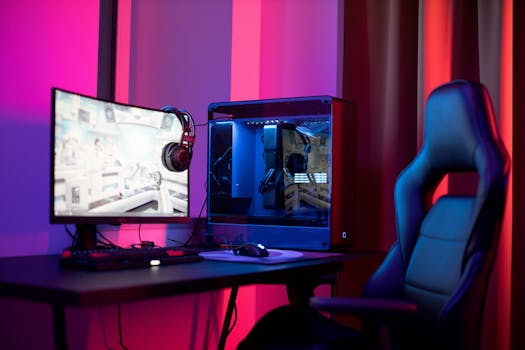
A sleek gaming setup featuring a high-end PC, widescreen monitor, and ergonomic chair lit by neon lights. Photo: Ron Lach / Pexels
For years, 4K gaming felt like an exclusive club, a luxurious pursuit reserved for those with deep pockets and top-tier graphics cards. The promise of four times the pixels of Full HD, delivering unparalleled visual clarity and immersion, was tantalizing but often out of reach for the average gamer. However, the landscape of gaming technology has evolved dramatically. What was once a premium, niche offering has steadily become more accessible, with a growing number of affordable 4K monitors for gaming now hitting the market. This shift is fantastic news for gamers who crave stunning visuals without having to mortgage their homes to get them. But what exactly does 'affordable 4K' mean in today's context, and what compromises, if any, do you need to consider? When we talk about 4K resolution, we're referring to 3840 x 2160 pixels. This incredible pixel density translates into incredibly sharp images, finer details, and a more expansive, lifelike visual experience compared to 1080p or even 1440p displays. For games, this means seeing intricate textures, distant objects, and environmental nuances with breathtaking clarity. Imagine exploring a vast open world where every blade of grass and every architectural detail is rendered with pristine precision. This level of detail significantly enhances immersion, pulling you deeper into the game's universe. Beyond sheer resolution, however, a true 4K gaming experience demands more. A monitor isn't just about the number of pixels; it's about how those pixels are delivered. Factors like refresh rate, response time, panel type, and adaptive sync technologies are equally critical in ensuring a smooth, responsive, and tear-free gaming session. Historically, combining 4K with high refresh rates (like 120Hz or 144Hz) was prohibitively expensive. Thankfully, advancements in manufacturing and increased competition have driven prices down, making this once-dreamy combination a tangible reality for budget-conscious gamers. This article aims to guide you through the exciting world of budget-friendly 4K gaming, helping you identify the key features to look for and avoid common pitfalls. We'll explore how to balance performance and price, ensuring you get the most bang for your buck and truly elevate your gaming experience without emptying your wallet. Understanding these core components is the first step towards making an informed decision and finding the perfect display that meets both your gaming aspirations and your budget.Learn more about monitor technology here.

Essential Features: What to Prioritize in Affordable 4K Gaming Monitors
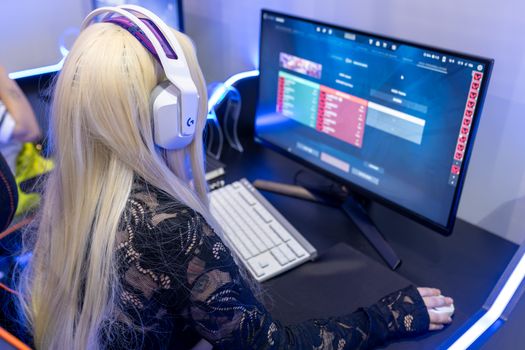
Young woman gaming at a PC high-tech setup, wearing headphones. Photo: Matheus Bertelli / Pexels
Navigating the specifications of gaming monitors can be overwhelming, especially when trying to find affordable 4K options. To make an informed decision, it's crucial to understand which features are non-negotiable for a good gaming experience and where you might be able to save a few dollars without sacrificing too much. The holy trinity of gaming monitor specs often includes refresh rate, response time, and adaptive sync technology. For 4K gaming, these become even more critical. First, let's talk about **refresh rate**. This is measured in Hertz (Hz) and indicates how many times per second the display updates its image. A higher refresh rate means smoother motion and less motion blur, which is a massive advantage in fast-paced games. While 60Hz 4K monitors are the most affordable, they might feel less fluid, especially if you're used to higher refresh rates at lower resolutions. For a truly satisfying 4K gaming experience, aim for at least 120Hz, and ideally 144Hz. Many affordable 4K monitors now offer 144Hz, making them a sweet spot for price and performance. The jump from 60Hz to 120Hz is significantly more noticeable than from 120Hz to 144Hz for most users, so focusing on that 120Hz baseline is a smart move. Next up is **response time**, typically measured in milliseconds (ms). This refers to how quickly a pixel can change from one color to another. A lower response time minimizes ghosting and smearing, which are particularly undesirable in competitive gaming where every millisecond counts. Look for monitors with a 1ms or 2ms Gray-to-Gray (GtG) response time. Some manufacturers advertise MPRT (Moving Picture Response Time), which is a different metric, so always double-check you're comparing apples to apples. While a 5ms GtG might be acceptable for casual gaming, competitive players will definitely appreciate the snappiness of 1ms. **Adaptive Sync technologies** like AMD FreeSync and NVIDIA G-Sync (or G-Sync Compatible) are game-changers. These technologies synchronize your monitor's refresh rate with your graphics card's frame rate, eliminating screen tearing and reducing stuttering. This results in incredibly fluid gameplay, even when your frame rate fluctuates. Most affordable 4K gaming monitors will support FreeSync, which is an open standard and generally more common. Many FreeSync monitors are also G-Sync Compatible, meaning they've been tested by NVIDIA to work with their GPUs, offering excellent value. Always check for this compatibility if you have an NVIDIA card. Beyond these core three, consider the **panel type**. IPS (In-Plane Switching) panels offer excellent color accuracy and wide viewing angles, making them ideal for immersive, visually rich games and content creation. VA (Vertical Alignment) panels provide superior contrast ratios, leading to deeper blacks, but can sometimes have slower response times. TN (Twisted Nematic) panels are the fastest in terms of response time but often compromise on color reproduction and viewing angles. For affordable 4K gaming, IPS is usually the preferred choice for its balanced performance and vibrant visuals. Lastly, don't forget **connectivity**. For 4K at 120Hz or 144Hz, you'll need a monitor with DisplayPort 1.4 or HDMI 2.1 ports. HDMI 2.1 is particularly important if you plan to connect next-gen consoles like the PS5 or Xbox Series X, as it supports 4K 120Hz over a single cable. Ensure your chosen monitor has the right ports for your setup.

Top Contenders: Best Affordable 4K Monitors for Gaming in 2024

Young woman intensely focused on playing a multiplayer online game at a high-tech gaming station with a curved monitor. Photo: RDNE Stock project / Pexels
The market for affordable 4K gaming monitors is more competitive than ever, with several brands offering excellent value propositions. While 'affordable' is subjective, we're generally looking at monitors in the $300-$500 range that deliver a compelling 4K gaming experience without cutting too many corners. It's important to remember that prices can fluctuate, especially with sales events like Black Friday or Prime Day, so keeping an eye out for deals is always a good strategy. Here, we highlight some of the top contenders that consistently receive high praise for their performance and price point. One of the standout options often cited is the **Gigabyte M28U**. This monitor frequently appears on 'best budget' lists for good reason. It boasts a 28-inch IPS panel, offering excellent color accuracy and wide viewing angles, perfect for vibrant game worlds. Crucially, it delivers a 144Hz refresh rate and a 1ms MPRT response time, ensuring smooth and responsive gameplay. It also features AMD FreeSync Premium Pro and is often G-Sync Compatible, providing tear-free visuals for both AMD and NVIDIA users. Connectivity is robust, including HDMI 2.1, making it a fantastic choice for both PC and next-gen console gamers. Its KVM switch is an added bonus for those who use multiple devices with the same peripherals. While its HDR performance is modest, its overall package for the price is hard to beat. Another strong contender is the **Dell G3223Q**. If you prefer a larger screen real estate, this 32-inch monitor offers a more immersive experience. Like the Gigabyte, it features an IPS panel with 4K resolution and a 144Hz refresh rate. Dell is known for its reliable build quality and excellent customer support, which adds to the value. The G3223Q also includes HDMI 2.1 ports and FreeSync Premium Pro, making it highly versatile. While its response time is typically around 4ms GtG, it's still very respectable for casual to semi-competitive gaming, and the larger screen size often compensates for this slight difference for many users. Its factory calibration is usually very good, making it a great out-of-the-box experience. For those looking for a slightly smaller, perhaps more desk-friendly option, the **LG 27GN950-B (or its newer iterations like 27GP95R-B)** has been a long-time favorite. While sometimes pushing the upper limit of 'affordable,' its consistent performance makes it worth considering if you find it on sale. This 27-inch IPS panel delivers 4K at 144Hz (and often overclockable to 160Hz) with a blazing 1ms GtG response time. It supports FreeSync Premium Pro and is G-Sync Compatible, ensuring silky-smooth gameplay. LG's Nano IPS technology provides exceptional color gamut and vibrancy, making games look stunning. While it might be a bit pricier than other options on this list, its quality and feature set often justify the investment, especially if you prioritize top-tier performance in a smaller form factor. When comparing these options, always check current pricing and look for sales. Reviews from reputable tech sites like RTINGS.com or TechRadar can provide in-depth analysis and real-world performance benchmarks to help you make your final decision.Explore more gaming hardware reviews.

Maximizing Your Setup: Tips for Affordable 4K Gaming
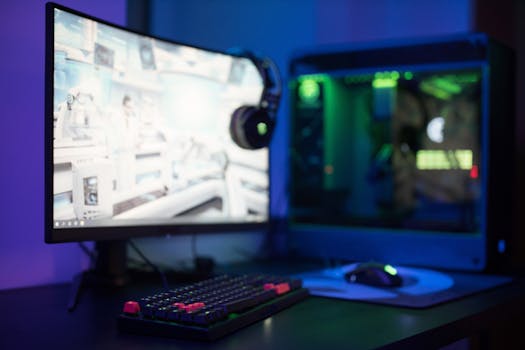
High-tech gaming setup featuring a curved monitor, RGB keyboard, and vibrant lighting. Photo: Ron Lach / Pexels
Acquiring an affordable 4K gaming monitor is just one piece of the puzzle; optimizing your entire setup can significantly enhance your experience. Here are some crucial tips to ensure you're getting the most out of your new display, without necessarily spending a fortune on other components. **1. Ensure Your GPU Can Handle It:** A 4K monitor needs a powerful graphics card to drive games at decent frame rates. While older cards might run some less demanding titles at 4K 30fps, for 4K 60fps+ and especially 120fps+, you'll need at least an NVIDIA RTX 3070/3070 Ti, RTX 4070, or AMD RX 6800 XT/7800 XT as a minimum, with higher-end cards like the RTX 3080/4080 or RX 6900 XT/7900 XT being ideal. Prioritize upgrading your GPU if it's currently a bottleneck. **2. Proper Cable Management and Connectivity:** Use the correct cables! For 4K at 120Hz or 144Hz, you need a DisplayPort 1.4 cable or an HDMI 2.1 cable. Older HDMI 2.0 cables will limit you to 4K 60Hz. Ensure your cables are of good quality to prevent signal issues. Keep your setup tidy to improve airflow and aesthetics. **3. Calibrate Your Monitor:** Out of the box, monitors often aren't perfectly calibrated. While professional calibration tools are expensive, you can make significant improvements using your monitor's OSD (On-Screen Display) settings and Windows' built-in color calibration tool. Look for optimal settings for brightness, contrast, color temperature, and gamma online for your specific monitor model. This can dramatically improve visual fidelity. **4. Utilize Adaptive Sync:** Make sure AMD FreeSync or NVIDIA G-Sync (or G-Sync Compatible) is enabled in both your monitor's OSD and your graphics card's control panel. This is essential for smooth, tear-free gameplay, especially when frame rates fluctuate. **5. Optimize In-Game Settings:** Running games at native 4K can be incredibly demanding. Don't be afraid to lower some graphical settings (like shadow quality, anti-aliasing, or volumetric clouds) if you're struggling to hit desired frame rates. Many modern games also include upscaling technologies like DLSS (NVIDIA) or FSR (AMD), which can render the game at a lower resolution and intelligently upscale it to 4K, providing a significant performance boost with minimal visual compromise. Experiment with these settings to find the best balance between visual quality and performance. **6. Consider Your Viewing Distance:** For a 27-32 inch 4K monitor, a viewing distance of around 2-3 feet is ideal to appreciate the pixel density without straining your eyes. Sitting too far away diminishes the impact of 4K resolution. **7. Keep Drivers Updated:** Always ensure your graphics card drivers are up to date. New drivers often include performance optimizations and bug fixes that can directly impact your gaming experience, especially with new titles or specific monitor technologies. By following these tips, you can ensure that your affordable 4K gaming monitor delivers the best possible experience, making your investment truly worthwhile. A great monitor is only as good as the system and settings driving it.

Comparison

FeatureGigabyte M28UDell G3223QLG 27GP95R-B
Screen Size28 inches32 inches27 inches
Panel TypeIPSIPSNano IPS
Resolution3840x2160 (4K)3840x2160 (4K)3840x2160 (4K)
Refresh Rate144Hz144Hz144Hz (160Hz OC)
Response Time (GtG)1ms (MPRT)4ms1ms
Adaptive SyncFreeSync Premium Pro, G-Sync Comp.FreeSync Premium ProFreeSync Premium Pro, G-Sync Comp.
HDMI 2.1
Typical Price Range (USD)$400-$500$450-$550$550-$650

What Readers Say

"I never thought I could afford a 4K gaming monitor, but this guide helped me find the perfect one. The Gigabyte M28U is phenomenal; games look incredibly sharp, and the 144Hz is so smooth. It's transformed my gaming experience completely!"

Sarah J. · Austin, TX

"Finally upgraded to 4K with the Dell G3223Q, and I'm blown away by the immersion. The larger screen size for gaming is a game-changer, and it performs beautifully with my RTX 3080. Great value for the money."

Mark D. · Seattle, WA

"After reading this, I snagged an LG 27GP95R-B on sale, and it's everything I hoped for. The colors are vibrant, response time is instant, and FreeSync works flawlessly. My competitive game scores have even improved slightly!"

Emily R. · Orlando, FL

"My new affordable 4K monitor is great for single-player games, but I still need a better GPU to fully utilize the 144Hz in all titles. The visual upgrade is undeniable, though, and it's a solid step up from my old 1440p display."

Alex P. · Denver, CO

"As a casual gamer and digital artist, finding an affordable 4K monitor for gaming that also had excellent color accuracy was key. The IPS panel on my chosen monitor does both perfectly, making my creative work and gaming equally enjoyable."

Jessica L. · New York, NY

Frequently Asked Questions

Is 4K gaming worth it on a budget?

Yes, absolutely! While it requires a capable graphics card, the visual fidelity and immersion offered by 4K resolution are a significant upgrade. With affordable 4K monitors now available, the barrier to entry has never been lower, offering incredible value for a truly premium visual experience.

Will an affordable 4K monitor compromise gaming performance?

Not necessarily in terms of the monitor's capabilities. Affordable 4K gaming monitors often come with high refresh rates (120Hz+) and low response times (1ms), just like their more expensive counterparts. The main performance consideration will be your graphics card's ability to drive games at 4K resolution and desired frame rates.

How do I ensure my PC can handle 4K gaming?

To handle 4K gaming effectively, you'll need a modern mid-to-high-end graphics card (e.g., NVIDIA RTX 3070/4070 or AMD RX 6800 XT/7800 XT or better). Also, ensure your CPU is strong enough not to bottleneck the GPU, and you have sufficient RAM (16GB+ is recommended). Always check game benchmarks for your specific hardware.

What's a reasonable price for an 'affordable' 4K gaming monitor?

In 2024, a truly affordable yet high-performing 4K gaming monitor typically falls within the $300-$550 USD range. You can find excellent options with 144Hz refresh rates, 1ms response times, and adaptive sync within this budget, especially during sales events.

How does an affordable 4K monitor compare to a high-end 1440p monitor?

A high-end 1440p monitor (e.g., 240Hz+) will offer higher frame rates and potentially lower input lag for competitive gaming. An affordable 4K monitor prioritizes visual fidelity and immersion. If your GPU can handle 4K, the increased sharpness and detail are often preferred for single-player, graphically rich games, while the 1440p might still be king for esports.

Who should consider buying affordable 4K monitors for gaming?

Gamers who prioritize stunning visual detail, immersive experiences, and have a capable graphics card but don't want to spend premium prices on a display should consider affordable 4K monitors. It's also great for those who enjoy both gaming and content consumption/creation, benefiting from the extra screen real estate and clarity.

Are there any long-term risks with budget 4K monitors?

As with any budget tech, there's a slight risk of receiving a panel with more backlight bleed or dead pixels compared to premium models, though quality control has improved greatly. Sticking to reputable brands with good warranties minimizes this risk. Otherwise, the technology itself is mature and reliable.

What are the future trends for affordable 4K gaming monitors?

Expect to see more mini-LED and OLED technologies trickle down into the 'affordable' category, offering superior contrast and HDR performance. Higher refresh rates (160Hz+) will become standard, and HDMI 2.1 will be ubiquitous, further enhancing connectivity for both PCs and next-gen consoles.

Don't let budget constraints hold you back from the incredible world of 4K gaming. With the right research and understanding of key features, you can find affordable 4K monitors for gaming that deliver stunning visuals and competitive performance. Take the leap and transform your gaming experience today.

Topics: affordable 4K monitors for gamingbudget 4K gaming displaybest cheap 4K gaming monitor4K gaming monitor dealshigh refresh rate 4K monitor
Leo List

DK Escorts LU Escorts AT Escorts SE Escorts FI Escorts CH Escorts DE Escorts HR Escorts IE Escorts GR Escorts CZ Escorts NO Escorts BE Escorts FR Escorts SI Escorts IL Escorts NL Escorts PL Escorts HU Escorts ES Escorts IT Escorts PT Escorts SK Escorts RO Escorts ZA Escorts UY Escorts US Escorts UK Escorts NZ Escorts AU Escorts
Brampton weed
Adultwork EstrelaBet Vai de Bet R7 Bet Betão Galera Bet Rainbet Bet9ja Shop SportyBet BetKing Sisal Loto Foot Hollywoodbets YesPlay Odibets RushBet Jugabet BetWarrior BetCity MSport betPawa Fortebet